Hair fall is one of the most emotionally distressing health concerns affecting millions of Indians—men, women, and increasingly, teenagers. While losing 50 to 100 hair strands per day is medically normal (physiological shedding), consistently finding clumps of hair on your pillow, in the shower drain, or on your comb signals a deeper underlying problem that deserves clinical attention.
In India, studies estimate that over 73% of men develop some degree of androgenetic alopecia (pattern baldness) by age 50, and approximately 40% of women experience noticeable hair thinning during their lifetime—often after pregnancy, during PCOS, or around menopause. Yet most people delay seeking help, trying random home remedies or expensive shampoos instead of addressing the root medical cause.
This guide is designed to help you understand the science behind hair growth and loss, identify the specific medical cause of YOUR hair fall, and explore every evidence-based treatment option—from simple dietary corrections to advanced trichological therapies—so you can take informed, effective action.
Understanding the Hair Growth Cycle: Why Hair Falls Naturally
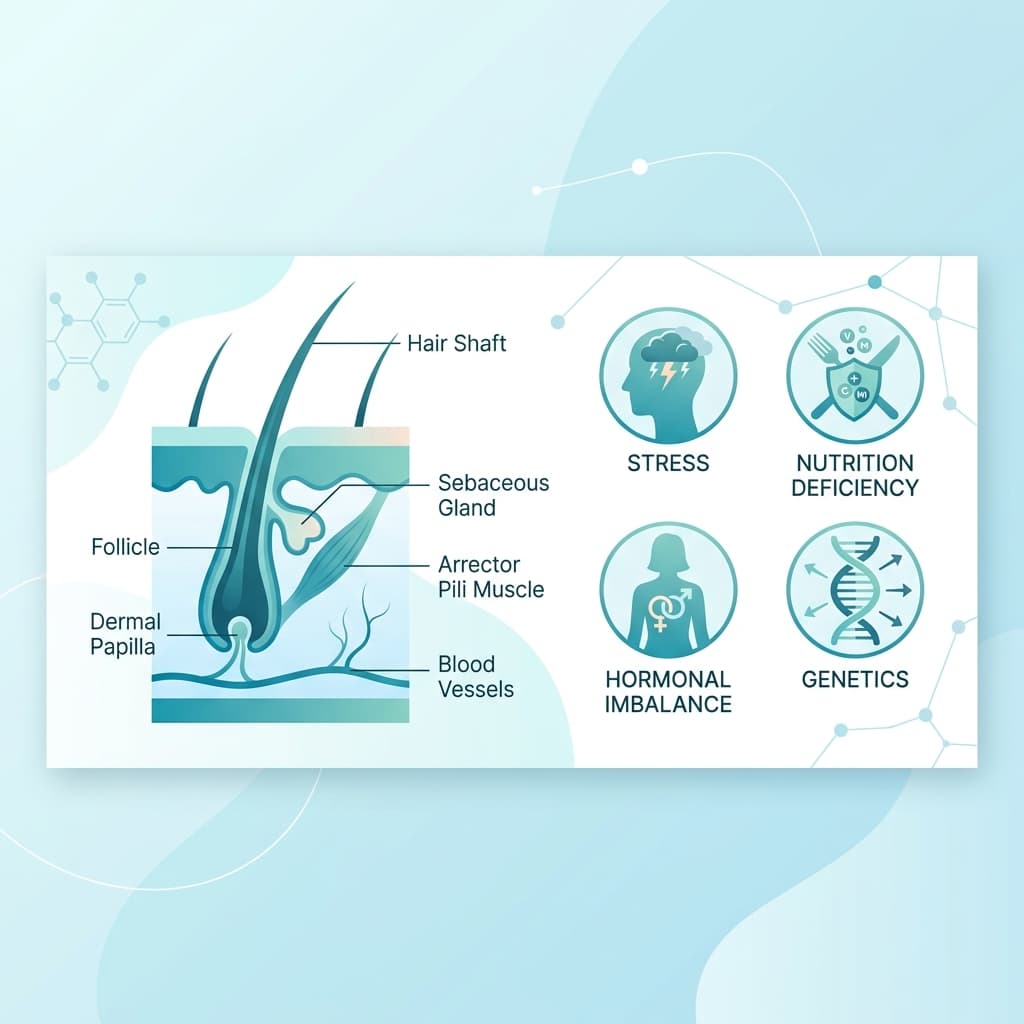
Each hair strand on your head follows an independent, cyclical life cycle consisting of three distinct phases. Understanding this cycle is critical because most types of hair loss work by disrupting one or more of these phases:
The Three Phases of the Human Hair Growth Cycle
| Phase | Name | Duration | What Happens | % of Scalp Hair |
|---|---|---|---|---|
| Phase 1 | Anagen (Growth Phase) | 2 to 7 years | Hair follicle is actively producing new hair cells. The hair shaft grows approximately 1 cm per month. Longer anagen = longer hair. | 85–90% |
| Phase 2 | Catagen (Transition Phase) | 2 to 3 weeks | The follicle shrinks, detaches from the dermal papilla blood supply, and stops growing. This is a brief 'rest stop' between growth and shedding. | 1–2% |
| Phase 3 | Telogen (Resting & Shedding Phase) | 3 to 4 months | The old hair rests in the follicle while a new anagen hair begins forming underneath. Eventually the old strand falls out as the new one pushes through. | 10–15% |
KEY INSIGHT: When a medical condition, hormone, or nutritional deficiency prematurely shifts a large percentage of hair follicles from the Anagen (growth) phase into the Telogen (shedding) phase, you experience what dermatologists call Telogen Effluvium—a sudden, diffuse, alarming increase in daily hair fall that typically begins 2 to 4 months after the triggering event.
12 Hidden Medical Causes of Hair Fall
Hair loss is rarely caused by a single factor. In clinical practice, dermatologists and trichologists evaluate patients systematically to identify one or more underlying triggers from the following categories:
1. Androgenetic Alopecia (Male & Female Pattern Hair Loss)
The most common cause of progressive hair loss worldwide. In genetically susceptible individuals, the hormone Dihydrotestosterone (DHT)—a potent derivative of testosterone—binds to androgen receptors on hair follicles, causing them to miniaturize (shrink) over successive growth cycles. The hair becomes progressively thinner, shorter, and finer until the follicle eventually stops producing visible hair altogether. In men, this typically manifests as a receding hairline and crown thinning. In women, it presents as diffuse thinning along the central part while the frontal hairline is usually preserved.
2. Thyroid Disorders (Hypothyroidism & Hyperthyroidism)
The thyroid gland regulates the metabolic rate of virtually every cell in the body, including hair follicle cells. Both an underactive thyroid (hypothyroidism) and an overactive thyroid (hyperthyroidism) disrupt the hair growth cycle, causing diffuse hair thinning across the entire scalp—not in patches. Hypothyroidism is especially prevalent in Indian women and often goes undiagnosed for years. Classic associated signs include fatigue, weight gain, dry skin, and cold intolerance.
3. Iron Deficiency & Anaemia
Iron is essential for producing hemoglobin, which carries oxygen to hair follicle cells. When the body's iron stores (measured as serum ferritin) drop below optimal levels—even before frank anaemia develops—the body diverts iron away from 'non-essential' tissues like hair follicles to prioritize vital organs. Research shows that ferritin levels below 30 ng/mL are strongly associated with increased hair shedding, particularly in women with heavy menstrual cycles, vegetarian diets, or frequent blood donation.
4. Vitamin D Deficiency
Despite living in a tropical country, an estimated 70 to 90% of Indians are Vitamin D deficient. Vitamin D receptors are present on hair follicle keratinocytes and play a crucial role in stimulating new hair follicle cycling. Severe Vitamin D deficiency (levels below 20 ng/mL) has been clinically linked to telogen effluvium and even alopecia areata (autoimmune patchy hair loss). Symptoms often include bone pain, muscle weakness, and chronic fatigue.
5. Polycystic Ovary Syndrome (PCOS)
PCOS is one of the most common hormonal disorders in Indian women of reproductive age, affecting approximately 1 in 5 women. Elevated androgens (male hormones) in PCOS cause a 'double whammy'—excessive facial and body hair growth (hirsutism) combined with scalp hair thinning in a pattern similar to female androgenetic alopecia. If you're experiencing irregular periods, acne, weight gain around the waist, AND hair thinning—PCOS should be strongly suspected.
6. Chronic Stress & Telogen Effluvium
Severe physical or emotional stress—such as a major surgery, high fever (including post-COVID), chronic sleep deprivation, emotional trauma, crash dieting, or prolonged work pressure—triggers the release of cortisol (stress hormone), which prematurely pushes a large proportion of anagen (growing) hair follicles into the telogen (shedding) phase. The hair fall typically begins 2 to 4 months after the stressful event, which is why patients often fail to connect the trigger with the shedding.
7. Post-Pregnancy Hair Fall (Postpartum Telogen Effluvium)
During pregnancy, elevated estrogen levels keep hair in the growth phase longer than usual, giving many women the thickest, most lustrous hair of their lives. After delivery, estrogen levels plummet dramatically, and all those 'extra' hairs that were held in the growth phase enter the shedding phase simultaneously. This causes dramatic hair fall 3 to 6 months postpartum—often alarming new mothers. The reassuring news: this is temporary and self-resolving within 6 to 12 months.
8. Nutritional Deficiencies Beyond Iron
Several micronutrients beyond iron are critical for healthy hair synthesis:
Key nutrients essential for hair health:
- Biotin (Vitamin B7): Essential for keratin protein synthesis—the structural building block of hair. Deficiency causes brittle, thinning hair and nail changes.
- Zinc: Regulates hair follicle cell division and oil gland function. Low zinc is linked to telogen effluvium and slow wound healing.
- Vitamin B12 & Folate: Critical for red blood cell formation and oxygen delivery to follicles. Deficiency is especially common in strict vegetarians.
- Protein: Hair is 95% keratin protein. Severely protein-deficient diets (crash diets, extreme caloric restriction) directly cause hair thinning.
- Omega-3 Fatty Acids: Nourish hair follicles, support scalp health, and reduce inflammatory micro-damage around follicles.
9. Alopecia Areata (Autoimmune Patchy Hair Loss)
An autoimmune condition where the body's immune system mistakenly attacks its own hair follicles, causing sudden, well-defined circular bald patches on the scalp (sometimes on the beard or eyebrows). The affected skin looks smooth and normal—no scarring, no scaling. The condition can be triggered by extreme stress, viral infections, or genetic predisposition. Most cases of limited alopecia areata regrow spontaneously, but extensive cases may require immunotherapy.
10. Medications & Medical Treatments
Several common medications list hair loss as a known side effect. These include certain blood pressure medications (beta-blockers), blood thinners (warfarin, heparin), antidepressants (SSRIs), anti-seizure drugs, retinoids (Vitamin A derivatives), and chemotherapy agents. If you notice hair thinning after starting a new medication, discuss it with your treating doctor—never stop prescribed medication without medical guidance.
11. Scalp Infections & Dermatological Conditions
Fungal infections of the scalp (tinea capitis) cause patchy hair loss with scaling, redness, and sometimes pus-filled bumps. Severe seborrheic dermatitis (chronic dandruff with inflammation) and scalp psoriasis can also weaken hair roots and increase shedding. These conditions are treatable but require proper dermatological diagnosis—self-treating with random anti-dandruff shampoos often delays resolution.
12. Traction Alopecia (Hairstyle-Related Hair Loss)
Chronic pulling on hair follicles from tight hairstyles—tight ponytails, braids, buns, hair extensions, or turbans tied very tightly—causes gradual, permanent damage to hair follicles along the hairline and temples. This type of hair loss is preventable and partially reversible if caught early, but can become permanent (scarring alopecia) if the traction continues for years.
Diagnostic Blood Tests: What Your Dermatologist Will Order
When you visit a dermatologist for hair fall, they will take a detailed medical history, examine your scalp and hair pull pattern, and typically order a targeted panel of blood investigations to identify the underlying cause:
Essential Blood Tests for Hair Fall Evaluation
| Test | What It Checks | Optimal Range for Hair Health | Why It Matters |
|---|---|---|---|
| Complete Blood Count (CBC) | Hemoglobin, RBC, WBC, platelets | Hb > 12 g/dL (women), > 13 g/dL (men) | Detects anaemia—the most common nutritional cause of hair fall in Indian women |
| Serum Ferritin | Iron storage levels in the body | > 40 ng/mL (ideally > 70 for optimal hair growth) | Ferritin below 30 ng/mL is strongly associated with hair shedding, even without frank anaemia |
| Thyroid Panel (TSH, T3, T4) | Thyroid gland function | TSH: 0.4–4.0 mIU/L | Both hypothyroidism and hyperthyroidism cause diffuse hair thinning |
| Vitamin D (25-OH) | Vitamin D blood level | > 30 ng/mL (deficient: < 20) | 70–90% of Indians are deficient; linked to telogen effluvium and alopecia areata |
| Vitamin B12 | B12 level in blood | > 300 pg/mL | Common deficiency in vegetarians; impairs red blood cell and follicle oxygen supply |
| Zinc | Serum zinc levels | 70–120 μg/dL | Low zinc disrupts hair follicle cell division and oil gland function |
| DHEA-S & Testosterone (Women) | Androgen (male hormone) levels | Age-specific ranges | Elevated androgens suggest PCOS or adrenal hyperandrogenism causing female pattern hair loss |
| Fasting Insulin / HOMA-IR | Insulin resistance | Fasting insulin < 10 μIU/mL | Insulin resistance drives androgen excess and worsens pattern hair loss |
Hair Loss Classification: Understanding Your Grade
Dermatologists use standardized classification scales to grade the severity of pattern hair loss and guide treatment decisions:
Norwood-Hamilton Scale (Male Pattern Baldness)
Norwood-Hamilton Classification for Male Pattern Hair Loss
| Grade | Pattern Description | Typical Treatment Approach |
|---|---|---|
| Grade I | Minimal or no recession of hairline | Preventive care: scalp health optimization, nutritional support |
| Grade II | Slight recession at temples ('mature hairline') | Topical Minoxidil 5%, DHT-blocking shampoos, nutritional optimization |
| Grade III | Deep temple recession forming M-shaped hairline | Minoxidil + Finasteride (1 mg oral), PRP therapy |
| Grade IV | Further frontal recession with early crown thinning | Combination medical therapy + PRP + consider hair transplant evaluation |
| Grade V–VI | Extensive loss—frontal and crown areas merge | Hair transplant (FUE/FUT) + ongoing medical therapy to preserve remaining hair |
| Grade VII | Only a band of hair remains along sides and back | Hair transplant with realistic density goals + medical maintenance |
Ludwig Scale (Female Pattern Hair Loss)
Ludwig Classification for Female Pattern Hair Loss
| Grade | Pattern Description | Typical Treatment Approach |
|---|---|---|
| Grade I (Mild) | Perceptible thinning along central part; frontal hairline preserved | Topical Minoxidil 2%, iron/vitamin correction, anti-androgen evaluation |
| Grade II (Moderate) | Pronounced thinning; wider central parting visible through hair | Minoxidil 5% + PRP + hormonal assessment (PCOS workup) |
| Grade III (Severe) | Near-total loss over crown; thin see-through hair remaining | Combination therapy + hair transplant evaluation + spironolactone (if PCOS) |
Evidence-Based Treatment Options for Hair Fall
Modern dermatology offers a wide range of proven treatments for hair loss. The right treatment depends on the type and cause of your hair fall, which is why professional diagnosis is essential before starting any therapy:
1. Topical Minoxidil (Rogaine)
Minoxidil is the most widely prescribed first-line topical treatment for both male and female pattern hair loss. It works by widening blood vessels around hair follicles, improving blood flow and nutrient delivery, and prolonging the anagen (growth) phase of the hair cycle. Available as 2% (for women) and 5% (for men) solutions or foam, applied directly to the scalp twice daily. Results typically become visible after 3 to 6 months of consistent use. Important: hair shedding may temporarily increase during the first 2–4 weeks ('minoxidil shedding phase') as weaker telogen hairs are pushed out by new anagen hairs—this is a positive sign, not a reason to stop.
2. Finasteride (Oral DHT Blocker – For Men)
Finasteride 1 mg (oral tablet, once daily) is a prescription medication that blocks the enzyme 5-alpha reductase, which converts testosterone to DHT—the hormone responsible for follicle miniaturization in androgenetic alopecia. Clinical trials show that finasteride reduces DHT levels by approximately 70% and stops hair loss progression in about 90% of men, with visible regrowth in 60–65% of users over 12 months. Finasteride is not approved for use in women of childbearing age due to teratogenic risk.
3. PRP Therapy (Platelet-Rich Plasma)
PRP is one of the most popular advanced treatments for hair loss in India. A small amount of your own blood is drawn, centrifuged to concentrate the growth factor–rich platelet layer, and then injected directly into the scalp at the level of the hair follicles. These growth factors (PDGF, VEGF, EGF) stimulate dormant follicles, increase blood supply, and prolong the anagen phase. Typically done as a series of 4 to 6 sessions spaced 3 to 4 weeks apart, followed by maintenance sessions every 3 to 6 months. PRP is suitable for both men and women.
4. Mesotherapy & Growth Factor Injections
Mesotherapy involves injecting a customized cocktail of vitamins, minerals, amino acids, and growth factors directly into the middle layer of the scalp (mesoderm). This delivers concentrated nutrition directly to follicles, bypassing the digestive system. It is often used alongside PRP for enhanced results, especially in cases of diffuse thinning related to nutritional deficiencies.
5. Low-Level Laser Therapy (LLLT)
FDA-cleared laser devices (helmets, caps, or combs) emit specific wavelengths of red light (650–670 nm) that are absorbed by hair follicle cells, stimulating cellular energy production (mitochondrial ATP synthesis) and promoting hair growth. LLLT is a painless, non-invasive add-on therapy that works best in combination with minoxidil or PRP.
6. Hair Transplant Surgery (FUE & FUT)
For advanced hair loss (Norwood Grade IV and above, Ludwig Grade II–III), surgical hair restoration offers a permanent solution. Follicular Unit Extraction (FUE) involves harvesting individual hair follicle units from the DHT-resistant donor area (back and sides of the scalp) and transplanting them to the thinning or bald areas. Modern FUE is minimally invasive, leaves no linear scar, and delivers natural-looking results. Follicular Unit Transplantation (FUT / strip method) involves removing a thin strip of scalp from the donor area, dissecting individual follicular units under a microscope, and transplanting them. FUT can harvest more grafts in a single session but leaves a linear scar.
IMPORTANT: A hair transplant does NOT stop ongoing hair loss. Patients must continue medical therapy (minoxidil, finasteride, or PRP) after transplant to preserve their existing non-transplanted hair. Otherwise, you may lose native hair around the transplanted area, creating an unnatural appearance over time.
The 10-Step Daily Hair Care Routine (Dermatologist-Recommended)
Beyond medical treatments, your daily hair care habits play a massive role in controlling hair fall. Here is a clinically-backed daily routine that every person experiencing hair fall should follow:
Your daily hair health protocol:
- 1. Wash hair 3 times per week with a gentle, sulfate-free or mild medicated shampoo. Over-washing strips natural oils; under-washing allows sebum buildup and dandruff.
- 2. Never skip conditioner. Apply conditioner from mid-length to tips (not roots) to prevent breakage and reduce combing friction.
- 3. Use a wide-tooth wooden comb and never comb wet hair aggressively. Wet hair is 50% weaker and stretches before snapping. Gently detangle starting from the ends upward.
- 4. Pat-dry with a soft cotton T-shirt, NOT a rough towel. Rubbing wet hair with a terry cloth towel creates friction damage and cuticle lifting.
- 5. Minimize heat styling. Limit use of hair dryers, straighteners, and curling irons. If you must use them, apply a heat protectant spray and use the lowest heat setting.
- 6. Avoid tight hairstyles. Loose ponytails, braids, or open hair reduce traction stress on follicles. Change the position of your ponytail frequently.
- 7. Oil your scalp 1–2 times per week with coconut oil, almond oil, or a blend with castor oil. Massage gently for 5 minutes to boost scalp circulation—but do NOT leave oil on for more than 2 hours (excessive oiling can clog pores and worsen dandruff).
- 8. Protect hair from sun and pollution. UV radiation damages hair protein. Use a scarf or hat when outdoors for extended periods, and wash hair after exposure to heavy pollution or dust.
- 9. Manage stress actively. Incorporate at least 20–30 minutes of daily exercise, practice deep breathing or meditation, and prioritize 7–8 hours of sleep. Chronic stress is a silent hair killer.
- 10. Never self-medicate. Avoid random hair growth serums, supplements, or treatments advertised on social media without consulting a qualified dermatologist. The wrong treatment can worsen hair fall or delay proper diagnosis.
Hair-Healthy Diet: What to Eat for Stronger Hair
Your hair is a reflection of your internal nutrition. No topical serum can compensate for a diet deficient in hair-critical nutrients. Here is a practical, Indian-diet-friendly table of foods that directly support hair health:
Essential Nutrients for Hair Health & Their Best Food Sources
| Nutrient | Role in Hair Health | Best Indian Food Sources | Daily Target |
|---|---|---|---|
| Iron | Oxygen delivery to follicles; low ferritin = hair shedding | Spinach, beetroot, pomegranate, jaggery, dates, ragi, bajra, red meat, liver | 18 mg (women), 8 mg (men) |
| Protein | Hair is 95% keratin protein; deficiency = thin, brittle hair | Eggs, paneer, dal, chickpeas, soybean, chicken, fish, greek yoghurt | 0.8–1 g per kg body weight |
| Vitamin D | Stimulates hair follicle cycling; deficiency = telogen effluvium | Sunlight (15–20 min morning exposure), fortified milk, egg yolks, fatty fish | > 30 ng/mL blood level |
| Biotin (B7) | Essential for keratin synthesis—hair's structural protein | Eggs (yolk), almonds, walnuts, sweet potatoes, mushrooms, oats | 30–100 μg |
| Zinc | Hair follicle cell division & oil gland regulation | Pumpkin seeds, sesame seeds, cashews, chickpeas, crab, oysters | 8–11 mg |
| Omega-3 Fatty Acids | Anti-inflammatory; nourishes follicles and scalp | Flaxseeds, chia seeds, walnuts, fatty fish (salmon, mackerel, sardines) | 250–500 mg EPA+DHA |
| Vitamin C | Enhances iron absorption; antioxidant protecting follicles | Amla (Indian gooseberry), guava, oranges, lemon, bell peppers | 65–90 mg |
| Vitamin B12 & Folate | Red blood cell formation; oxygen delivery to hair roots | Eggs, milk, curd, fortified cereals, leafy greens (folate) | B12: 2.4 μg, Folate: 400 μg |
PRO TIP: Pair iron-rich foods with Vitamin C sources to boost iron absorption by up to 300%. For example: spinach + lemon juice, beetroot + amla, or dal + tomato. Avoid drinking tea or coffee immediately after meals, as tannins block iron absorption by 50–70%.
Common Hair Fall Myths Debunked
Separating medical facts from widespread myths:
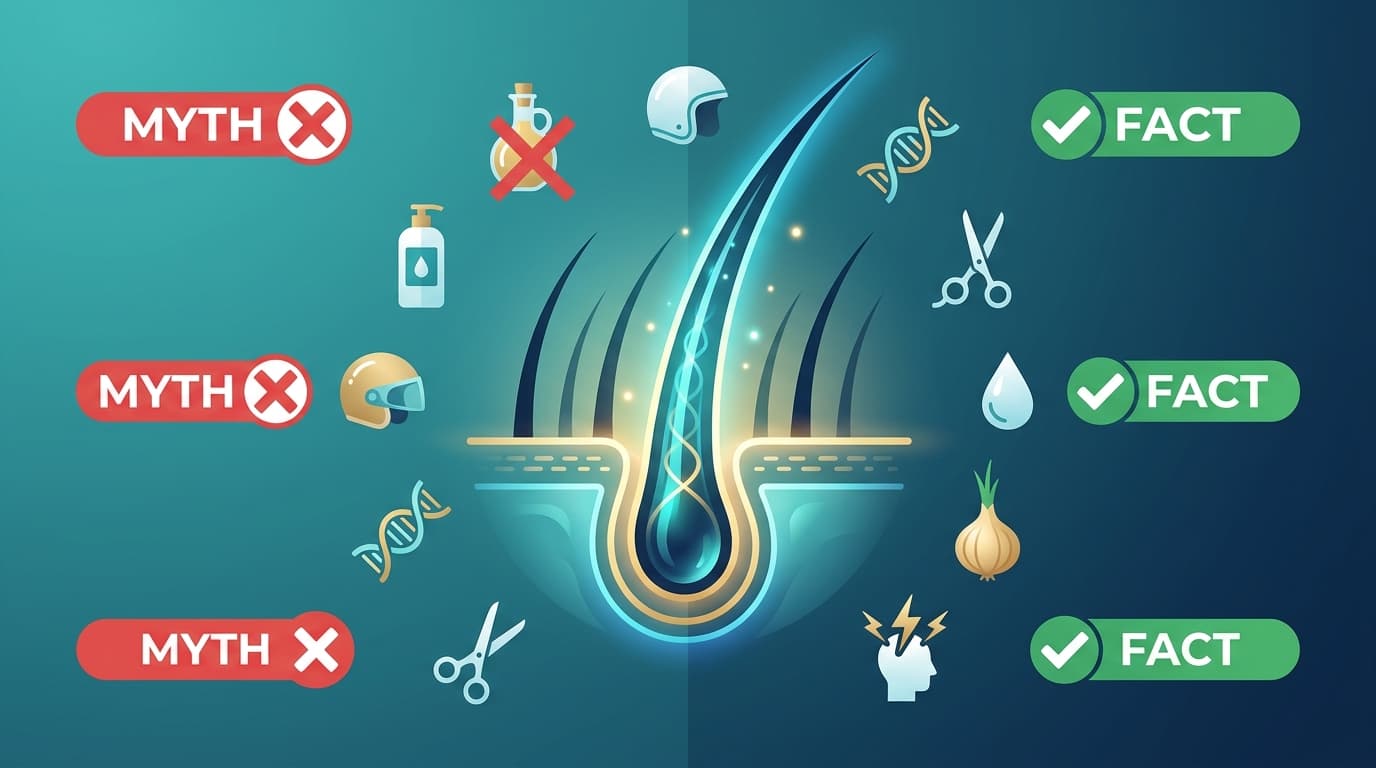
- MYTH: Washing hair frequently causes hair fall. FACT: Washing does not cause hair loss. You're simply seeing hairs that were already in the telogen (shedding) phase. Regular washing keeps the scalp clean and healthy.
- MYTH: Shaving your head makes hair grow back thicker. FACT: Shaving has zero effect on hair thickness, colour, or growth rate. The blunt cut end of the shaved hair may feel coarser temporarily, creating an illusion of thickness.
- MYTH: Only men go bald. FACT: Female pattern hair loss affects 40% of women by age 50. It presents differently (diffuse thinning rather than receding hairline) and has different hormonal causes.
- MYTH: Hair oil can regrow lost hair. FACT: Oiling improves scalp circulation and conditions existing hair, but it cannot reactivate dead or miniaturized follicles. Once a follicle is permanently miniaturized, only medical treatment or transplant can restore hair.
- MYTH: Wearing hats or helmets causes baldness. FACT: There is no scientific evidence that wearing hats causes hair loss. However, extremely tight, friction-causing headgear worn constantly could contribute to traction alopecia over many years.
- MYTH: Stress-related hair fall is permanent. FACT: Telogen effluvium from stress is almost always temporary. Once the stressor is resolved, hair regrows fully within 6 to 12 months.
When Should You See a Dermatologist?
Consult a dermatologist or trichologist promptly if you notice any of the following warning signs:
- Losing significantly more than 100 hair strands per day for more than 2–3 weeks continuously
- Visible scalp showing through hair, or a progressively widening central parting
- Sudden circular bald patches appearing on the scalp or beard
- Hair thinning accompanied by irregular periods, acne, or weight gain (possible PCOS)
- Hair fall starting after a new medication, surgery, or major illness
- Scalp itching, redness, scaling, or painful bumps alongside hair loss
- Receding hairline or crown thinning that is worsening despite home care
- Post-pregnancy hair fall that hasn't improved after 12 months
Early intervention is the single most important factor in hair loss treatment. Hair follicles that have been miniaturized for years or permanently scarred cannot be revived with medication alone. The earlier you get a proper diagnosis and start targeted treatment, the more hair you can preserve and regrow.
Expert Hair Fall Care at Sanjivani Hospital, Virar
The Department of Dermatology at Sanjivani Hospital, Virar West, provides comprehensive hair fall evaluation, diagnosis, and treatment. Our dermatologists offer thorough scalp examination, targeted blood investigation panels, and personalized treatment plans—including topical therapies, PRP treatment, nutritional counseling, and referral for advanced procedures when indicated. If hormonal causes like PCOS or thyroid disorders are identified, our multi-specialty team coordinates care across Dermatology, Gynecology, and Endocrinology for holistic management.
To book a dermatology consultation for hair fall assessment at Sanjivani Hospital, Virar West, contact our reception desk or visit our OPD during regular consulting hours. Early evaluation leads to better outcomes—don't wait until the hair loss becomes advanced.