
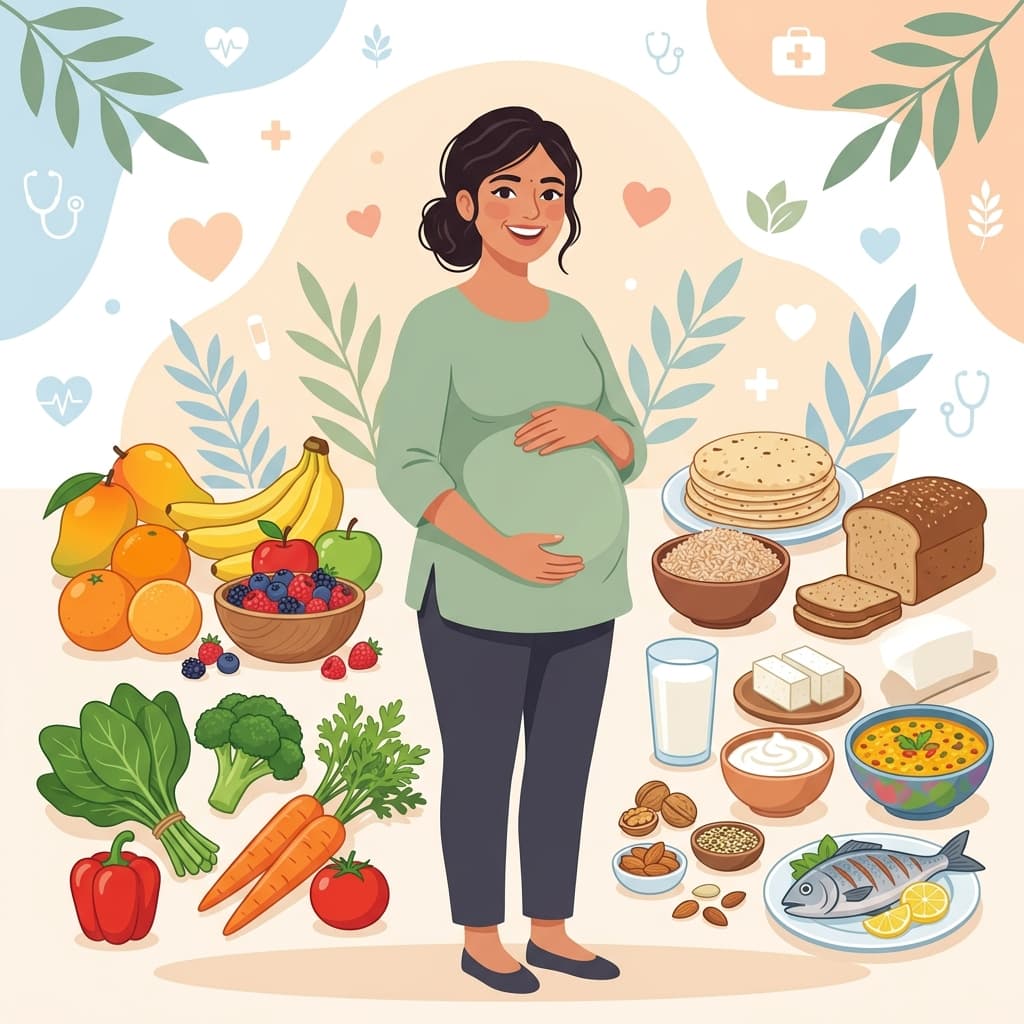
The moment you learn you are pregnant, the advice starts pouring in from every direction — eat this, avoid that, double your meals, skip the papaya. Some of it is well-intentioned, some of it is genuinely outdated, and a surprising amount of it has no medical basis at all.
Here is the reality: pregnancy nutrition is not about eating for two in quantity. It is about eating for two in quality. Your body needs specific nutrients at specific stages to build a whole new human being — brain, bones, blood, organs — and the food choices you make during these nine months genuinely matter. This article draws on guidance from the World Health Organization (WHO), the American College of Obstetricians and Gynecologists (ACOG), India's ICMR-National Institute of Nutrition (NIN), and published medical research to give you clear, practical information you can actually use.
You Do Not Need to Eat for Two — But You Do Need to Eat Better
One of the most persistent pregnancy myths is that you need to double your food intake. You do not. The ACOG and ICMR-NIN guidelines are clear: caloric needs increase only modestly, and only from the second trimester onwards. In the first trimester, most women do not need any extra calories at all. What changes from day one is the quality of what you eat — the focus shifts toward nutrient-dense foods that deliver more vitamins, minerals, and protein per bite.
Trimester-Wise Calorie Requirements
Here is what the research says about additional daily calorie needs during pregnancy:
- First Trimester (Weeks 1–12): No additional calories needed for most women. Focus on nutrient quality, not quantity. If nausea is severe, eat what you can keep down.
- Second Trimester (Weeks 13–27): Approximately 340–350 extra calories per day. That is roughly equivalent to a bowl of dal-rice with a side of curd and a piece of fruit — not a whole extra meal.
- Third Trimester (Weeks 28–40): Approximately 450 extra calories per day. A slightly larger increase, but still far less than doubling your portions.
- Important: These are general estimates based on ACOG and ICMR-NIN guidelines. Your actual needs depend on your pre-pregnancy weight, activity level, whether you are carrying multiples, and any existing health conditions. Your obstetrician will personalise this.
The Six Nutrients Your Baby Cannot Build Without
Out of all the vitamins and minerals your body needs, six are especially critical during pregnancy. Deficiencies in any of these can directly affect your baby's development and your own health during and after delivery.
1. Folate (Folic Acid) — The Neural Tube Protector
Folate is arguably the single most important nutrient in early pregnancy. It is essential for the development of the neural tube — the structure that becomes the baby's brain and spinal cord. Neural tube defects like spina bifida can occur in the very first weeks of pregnancy, often before a woman even knows she is pregnant. This is why the ICMR-NIN recommends 570 micrograms per day during pregnancy, and why folic acid supplements (typically 400–500 micrograms) are started even before conception when possible.
Good Indian dietary sources of folate:
- Green leafy vegetables: methi (fenugreek leaves), palak (spinach), amaranth (rajgira), and moringa (drumstick leaves)
- Legumes and lentils: moong dal, masoor dal, chana, rajma, and matki
- Nuts and seeds: groundnuts, walnuts, and flaxseeds
- Fortified atta (wheat flour) — increasingly available in urban areas
- Citrus fruits, beetroot, and avocado
2. Iron — The Blood Builder
During pregnancy, your blood volume increases by about 50 percent. That is a massive expansion, and it requires iron — lots of it. Iron deficiency anaemia is one of the most common complications in Indian pregnancies, affecting over half of pregnant women nationally according to NFHS data. The ICMR recommends supplementation of 60 milligrams of elemental iron daily from the second trimester, alongside dietary sources. The WHO also recommends daily iron-folic acid (IFA) supplementation throughout pregnancy.
Iron-rich foods and absorption tips:
- Plant-based iron: ragi (finger millet), dark green leafy vegetables, black sesame seeds (til), dates, jaggery (gud), and dried figs (anjeer)
- Animal-based iron (better absorbed): eggs, chicken liver, lean meat, and fish
- Absorption booster: Pair iron-rich foods with vitamin C sources like amla, guava, lemon, orange, or tomato. A squeeze of lemon on your palak dal genuinely helps.
- Absorption blocker: Avoid drinking tea or coffee with meals or immediately after — tannins significantly reduce iron absorption
3. Calcium — The Bone Builder
Your baby needs calcium for bone and tooth development, and the body will take it from your own bones if dietary intake is insufficient. The recommended daily intake during pregnancy is 1,000 milligrams. India's National Health Mission recommends calcium supplementation from the second trimester onward because dietary intake in the Indian population is frequently below requirements.
Good calcium sources in the Indian diet:
- Dairy: milk, dahi (curd/yogurt), paneer, and buttermilk (chaas)
- Millets: ragi is exceptionally rich in calcium — a single ragi roti provides a significant portion of daily needs
- Seeds: til (sesame seeds) — sprinkle on salads or add to chutneys
- Others: amaranth (rajgira), moringa leaves, small fish eaten with bones (if non-vegetarian)
- Vitamin D helps calcium absorption — 15 minutes of direct morning sunlight on your arms and face daily is recommended by ICMR-NIN
4. Protein — The Building Block of Everything
Protein requirements increase significantly during pregnancy, particularly in the second and third trimesters, when the baby's tissues, organs, and muscles are growing rapidly. ACOG and ICMR both recommend approximately 70–80 grams of protein per day during pregnancy. For vegetarian Indian women, this requires intentional planning.
Practical protein sources:
- Vegetarian: dal and legumes (moong, masoor, toor, chana), paneer, curd, soya chunks, tofu, sprouts, groundnuts, and milk
- Non-vegetarian: eggs (well-cooked), chicken, fish (low-mercury varieties), and lean mutton
- Combination strategy: pair cereals with dals (like khichdi or rice-dal) for a complete amino acid profile
- Tip: a glass of milk, a bowl of dal, a serving of paneer, and a cup of curd together provide roughly 35–40 grams of protein — about half your daily requirement
5. Omega-3 Fatty Acids (DHA) — The Brain Developer
DHA (docosahexaenoic acid), a type of omega-3 fatty acid, is critical for the development of the baby's brain and eyes, particularly in the third trimester. The FDA advises eating 8–12 ounces (roughly 2–3 servings) of low-mercury fish per week during pregnancy as the best natural source of DHA.
How to get DHA:
- Best source: fatty fish like salmon, sardines (mathi/tarli), mackerel (bangda — eat in moderation), and hilsa (ilish)
- Vegetarian alternatives: walnuts (akhrot), flaxseeds (alsi), and chia seeds provide ALA, which the body converts to DHA in small amounts
- Supplements: if your diet is low in fish, discuss a DHA supplement (usually algae-based for vegetarians) with your obstetrician
- Avoid high-mercury fish: shark, swordfish, king mackerel, and tilefish are off-limits during pregnancy
6. Iodine and Choline — The Brain's Silent Partners
These two nutrients often get overlooked, but both are essential for fetal brain development. Iodine deficiency during pregnancy can impair cognitive development, while choline supports the neural tube and brain growth. Most prenatal vitamins include iodine, but dietary sources include iodised salt (always use iodised salt when cooking), dairy products, eggs, and seafood. Choline is found in eggs (especially the yolk), soya, and groundnuts.
Key Nutrient Requirements at a Glance
The table below summarises daily recommended intakes for pregnant women based on ICMR-NIN and WHO guidelines. These numbers are not targets you need to calculate daily — they are benchmarks that help you understand why your doctor prescribes certain supplements and recommends certain foods.
Daily nutrient requirements during pregnancy (ICMR-NIN / WHO / ACOG guidance):
- Folate: 570 micrograms per day — Supplement of 400–500 micrograms typically prescribed; eat methi, palak, dal, and citrus fruits
- Iron: 27 milligrams per day (plus 60 mg supplement from second trimester) — Ragi, leafy greens, dates, eggs; pair with vitamin C
- Calcium: 1,000 milligrams per day — Milk, curd, paneer, ragi, sesame seeds; supplement often prescribed from second trimester
- Protein: 70–80 grams per day — Dal, paneer, eggs, chicken, soya, milk; increase especially in second and third trimesters
- DHA (Omega-3): 200–300 milligrams per day — Fatty fish, walnuts, flaxseeds; supplement if diet is low in fish
- Iodine: 220 micrograms per day — Iodised salt, dairy, eggs, seafood
- Choline: 450 milligrams per day — Eggs (yolk), soya, groundnuts
- Vitamin D: 600 IU per day — Morning sunlight (15 minutes daily), fortified milk, eggs; supplement commonly prescribed
What Your Plate Should Look Like: Trimester by Trimester
First Trimester: Survive and Nourish
The first trimester is often the hardest to eat well because of nausea and food aversions. That is normal. The priority here is not eating perfectly — it is keeping something down. Small, frequent meals (5–6 times a day instead of three large meals) work better for most women. Cold foods are sometimes better tolerated than hot ones. Dry crackers or plain rusk before getting out of bed can help manage morning sickness.
First trimester food priorities:
- Folic acid-rich foods: leafy greens, dal, citrus fruits, nuts — this is when the neural tube forms
- Ginger: small amounts of adrak chai or ginger biscuits may help with nausea (supported by a Cochrane review)
- Bland carbohydrates when nauseous: plain rice, roti, idli, upma, sabudana khichdi
- Stay hydrated: sip water, nimbu pani, coconut water, or buttermilk through the day — dehydration makes nausea worse
- Prenatal vitamin with folic acid: start immediately if you have not already
Second Trimester: Build and Grow
Nausea usually eases by weeks 13–14, and appetite returns — sometimes with a vengeance. This is when the baby's bones, muscles, and organs are growing rapidly, and your own blood volume is expanding. Iron and calcium become especially important from this point.
Second trimester food priorities:
- Increase protein: add an extra serving of dal, paneer, egg, or chicken daily
- Iron-rich foods: ragi porridge, palak, dates, jaggery — and start your prescribed iron supplement
- Calcium push: at least 2–3 servings of dairy (milk, curd, paneer) plus ragi or til
- Fibre for constipation: whole grains, fruits with skin, oats, guava, papaya (ripe papaya is generally considered safe — it is raw/unripe papaya that carries concerns)
- Healthy snacks: roasted chana, fruit with nut butter, sprout chaat, makhana (foxnuts)
Third Trimester: Fuel for the Final Stretch
The baby gains most of its weight in the final three months. Brain development accelerates. Space in your abdomen shrinks. You may feel full quickly, so smaller, more frequent meals become important again. DHA intake matters most now for brain development.
Third trimester food priorities:
- DHA and omega-3: fish twice a week, walnuts, flaxseeds, or a prescribed supplement
- Continue iron and calcium: anaemia risk is highest in the third trimester
- Energy-dense snacks: nuts, dried fruit and nut mixes (trail mix), banana smoothies with milk
- Smaller meals: eat 6 small meals rather than struggling with 3 large ones as the uterus compresses your stomach
- Adequate water: at least 8–10 glasses daily — dehydration can trigger premature contractions
Healthy Weight Gain During Pregnancy
Weight gain during pregnancy is normal and necessary — it reflects the growing baby, placenta, amniotic fluid, increased blood volume, and maternal fat stores that will support breastfeeding. But how much gain is healthy depends on your pre-pregnancy BMI. The IOM (now National Academy of Medicine) guidelines, also endorsed by ACOG and widely used in Indian obstetric practice, provide these recommendations for singleton pregnancies.
Recommended total weight gain by pre-pregnancy BMI (IOM/ACOG guidelines, singleton pregnancy):
- Underweight (BMI below 18.5): 12.5–18 kg (28–40 lbs)
- Normal weight (BMI 18.5–24.9): 11.5–16 kg (25–35 lbs)
- Overweight (BMI 25.0–29.9): 7–11.5 kg (15–25 lbs)
- Obese (BMI 30.0 or above): 5–9 kg (11–20 lbs)
In the first trimester, a gain of just 0.5 to 2 kg is typical. Most of the gain happens in the second and third trimesters at a gradual pace. Excessive weight gain raises the risk of gestational diabetes, pre-eclampsia, and complicated delivery. Insufficient gain can lead to a low birth weight baby. Do not attempt weight loss during pregnancy — instead, focus on healthy food choices and discuss your weight trajectory with your obstetrician at every visit.
Foods and Substances to Avoid Completely
Food safety during pregnancy is not about being overly anxious — it is about knowing the specific risks that are genuinely higher during this period. Pregnancy changes your immune system in ways that make certain infections more dangerous.
Alcohol — No Safe Amount
The CDC, WHO, and every major obstetric body worldwide are unambiguous: there is no known safe amount, type, or timing of alcohol during pregnancy. Alcohol crosses the placenta freely and can cause Fetal Alcohol Spectrum Disorders (FASD), which include permanent brain damage, growth problems, and learning disabilities. Wine, beer, spirits — all carry the same risk. The safest choice is zero alcohol throughout pregnancy.
Caffeine — Keep It Under 200 mg
You do not need to quit caffeine entirely, but you should limit it. The WHO and ACOG recommend no more than 200 milligrams per day — that is roughly one standard cup of filter coffee or two cups of tea. Excessive caffeine (above 300 mg daily) has been associated with increased risk of low birth weight and pregnancy loss in some studies. Remember that caffeine is also found in chocolate, cola drinks, and green tea — total intake matters.
High-Mercury Fish
Mercury can damage the developing nervous system. The FDA and Mayo Clinic advise avoiding shark, swordfish, king mackerel, tilefish, bigeye tuna, marlin, and orange roughy entirely during pregnancy. Low-mercury options like salmon, sardines, pomfret, rohu, and catla are safe and beneficial in moderate amounts (2–3 servings per week).
Raw and Undercooked Foods
Pregnant women are significantly more susceptible to foodborne infections including listeriosis, salmonella, and toxoplasmosis. The practical advice is straightforward: cook all meat, poultry, and eggs thoroughly (no runny yolks or rare meat), avoid unpasteurised dairy products and soft cheeses, wash all fruits and vegetables under running water before eating, and avoid raw sprouts and pre-cut salads from outside vendors.
Foods to avoid or handle with extra care during pregnancy:
- Raw or undercooked meat, poultry, and eggs — always cook thoroughly
- Unpasteurised milk and soft cheeses — check labels for pasteurisation
- Raw sprouts — cook them before eating
- Unripe or raw papaya — contains papain, which may stimulate uterine contractions (ripe papaya is generally considered safe by most obstetricians)
- Excessive pineapple — bromelain in large quantities is a concern; small amounts are usually fine
- Pre-cut fruit and roadside juices — contamination risk is higher during pregnancy
- Alcohol — zero is the only safe amount
- Tobacco and paan masala — directly harmful to fetal development
Managing Common Pregnancy Food Challenges
Morning Sickness and Nausea
Nausea affects up to 80 percent of pregnant women and is worst during the first trimester. A Cochrane systematic review found that ginger in various forms (tea, biscuits, capsules) may help reduce nausea. Practical strategies include eating small frequent meals, keeping dry crackers or rusk by the bedside, avoiding strong-smelling foods, and staying well-hydrated with sips of water, coconut water, or nimbu pani rather than gulping large amounts at once.
Constipation
Iron supplements and hormonal changes both contribute to constipation during pregnancy. Increase fibre gradually — whole grains, oats, fruits with skin (guava, apple), vegetables, and flaxseeds. Drink plenty of water. A warm glass of water first thing in the morning helps many women. Isabgol (psyllium husk) is generally considered safe during pregnancy but check with your doctor.
Heartburn and Acidity
Very common in the second and third trimesters as the growing uterus pushes against the stomach. Eat smaller meals, avoid lying down immediately after eating, limit spicy and fried foods, and keep dinner light and early. Cold milk or a small serving of curd can provide temporary relief.
Gestational Diabetes
If your glucose tolerance test shows gestational diabetes, your dietary approach will need adjustment under specialist guidance. The core principles remain the same — balanced meals with controlled carbohydrate portions, adequate protein and fibre, and regular small meals to prevent blood sugar spikes. Your obstetrician or a dietitian will provide a specific plan.
A Practical Indian Pregnancy Meal Plan
This is a sample day plan — not a prescription. Adjust according to your preferences, appetite, food intolerances, and doctor's advice. The goal is to show how all the nutrients we have discussed fit into normal Indian meals.
Sample daily meal plan for second and third trimesters:
- Early Morning: A glass of warm milk or warm water with a soaked almond and walnut mix (calcium, protein, DHA)
- Breakfast: Ragi dosa or vegetable paratha with curd, or idli-sambhar with a small bowl of fruit (iron, calcium, folate, protein)
- Mid-Morning Snack: A seasonal fruit (guava, mango, banana, or orange) with a handful of roasted chana or makhana (vitamin C, iron, fibre)
- Lunch: Brown rice or roti with dal, a green leafy vegetable sabzi (palak, methi, or sarson), a piece of paneer or egg curry, and a small bowl of curd or raita (protein, iron, calcium, folate)
- Afternoon Snack: Sprout chaat with lemon juice, or a glass of buttermilk with a small portion of roasted peanuts (protein, iron, vitamin C, probiotics)
- Evening Snack: Homemade trail mix (dates, walnuts, almonds, pumpkin seeds) with a cup of ginger tea or turmeric milk (DHA, iron, energy)
- Dinner: Roti with a lighter dal or vegetable curry, a small serving of fish or chicken if non-vegetarian, and a glass of warm milk before bed (protein, DHA, calcium)
- Throughout the Day: At least 8–10 glasses of water, coconut water, or nimbu pani
Supplements: What Your Doctor Will Prescribe and Why
Even with the best diet, meeting all nutrient requirements through food alone during pregnancy is difficult. That is why prenatal supplements exist — they are not a replacement for healthy eating, but a safety net. The standard supplements prescribed in Indian obstetric practice, in line with WHO and ICMR-NIN guidelines, include:
Commonly prescribed pregnancy supplements:
- Folic Acid (400–500 micrograms): Started before conception ideally, continued through at least the first trimester
- Iron-Folic Acid (IFA) tablets (60 mg iron + folic acid): Prescribed from the second trimester to prevent anaemia — part of India's national health programme
- Calcium supplement (500–1000 mg): Usually prescribed from the second trimester — take separately from iron (at a different time of day) as calcium interferes with iron absorption
- Vitamin D (cholecalciferol): Often prescribed if blood levels are low, which is common in Indian women despite the tropical climate
- DHA supplement (200–300 mg): Recommended if dietary fish intake is low or for vegetarian mothers
- Important: Do not self-prescribe supplements. Some (like vitamin A in high doses) can be harmful during pregnancy. Take only what your obstetrician recommends.
When to Seek Medical Help
Nutrition is foundational, but it does not replace medical care. Visit your obstetrician or come to the emergency department if you experience severe vomiting that prevents you from keeping any food or water down for more than 24 hours (hyperemesis gravidarum requires medical treatment), sudden significant weight gain with swelling in the hands or face (a possible sign of pre-eclampsia), or if your glucose tolerance test shows gestational diabetes and you need dietary counselling. Sanjivani Hospital in Virar West has a full Obstetrics and Gynecology department with experienced obstetricians, in-house diagnostic lab, and 24x7 emergency services.
The Bigger Picture
Pregnancy nutrition is not about perfection. Nobody eats perfectly for nine months straight. There will be days when all you can manage is plain rice and dal. Days when you crave ice cream at 2 AM. Days when vegetables make you gag. That is all normal.
What matters is the overall pattern — getting enough of the critical nutrients over the course of weeks and months, taking your prescribed supplements consistently, staying hydrated, eating a variety of foods from all food groups, and avoiding the specific things that carry genuine risk (alcohol, tobacco, raw meat, high-mercury fish). If you are doing that most of the time, you are doing well.
Every pregnancy is different. What works for your sister or neighbour may not work for you. Trust your obstetrician, follow evidence-based guidance, listen to your body, and do not let the noise of unsolicited advice overwhelm you.