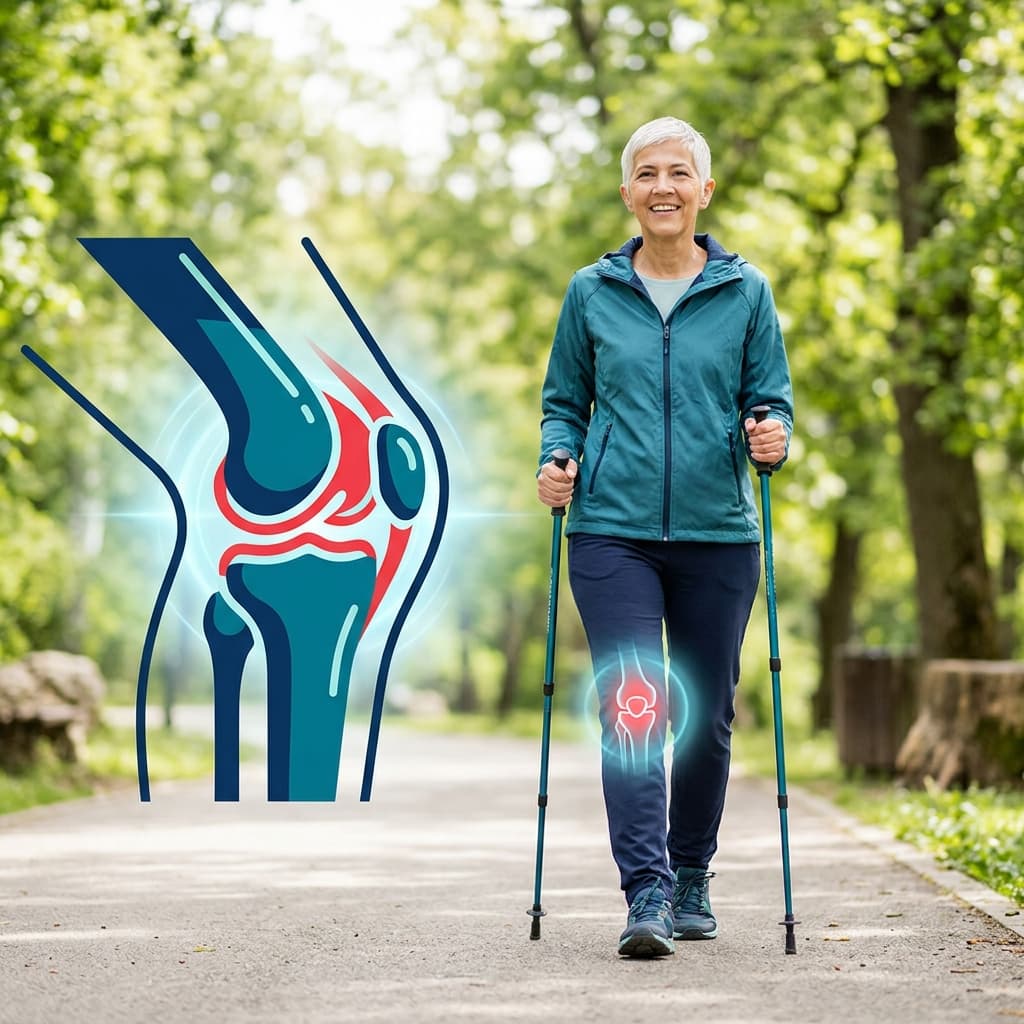

The number 10,000 has become so familiar that many people treat it as a pass-or-fail test. Miss it, and the walk home can feel as if it did not count. Reach it, and a fitness tracker may suggest the day is complete. But the science is more encouraging—and more useful—than that. Health benefits do not wait at a single magic number. They begin well below 10,000 steps and build gradually as a person moves more.
A large 2025 systematic review in The Lancet Public Health brought fresh clarity to the conversation. Across 57 studies from 35 cohorts, the researchers found that roughly 7,000 steps a day was associated with meaningful differences in several important health outcomes when compared with 2,000 steps a day. This is not a promise that a pedometer prevents disease. It is a practical reminder that an achievable daily walking habit can matter.
The short answer: is 7,000 steps a good goal?
For many adults, 7,000 daily steps is a realistic, evidence-informed target—especially for someone moving up from a low baseline. It is not a universal prescription, a diagnosis, or a substitute for medical care. Your age, fitness, medications, pregnancy status, mobility, symptoms, and medical conditions all matter. The most useful target is one you can do safely and repeat often enough for it to become part of ordinary life.
The World Health Organization still frames its adult guidance in time and intensity rather than steps: 150–300 minutes of moderate aerobic activity a week, or 75–150 minutes of vigorous activity, alongside muscle-strengthening activity on two or more days. A step count is simply an easy feedback tool. It does not tell the whole story about intensity, strength, balance, cycling, swimming, wheelchair movement, or recovery.
What the 2025 research actually found
The review pooled prospective studies that used devices to measure daily steps. Compared with 2,000 steps per day, 7,000 steps per day was associated with a 47% lower risk of all-cause mortality, a 25% lower risk of cardiovascular disease incidence, a 14% lower risk of type 2 diabetes, a 38% lower risk of dementia, and a 22% lower risk of depressive symptoms. Those are associations across populations—not guarantees for one person—and the research cannot prove that steps alone caused every difference. People who walk more may also differ in diet, income, illness, access to care, and many other ways.
That distinction matters. A headline such as ‘7,000 steps cuts risk by 47%’ can sound like a promise. It is better understood as a comparison in observed risk between groups with different habitual step counts. The authors also noted limits: fewer studies were available for several outcomes, some evidence was lower-certainty, and the analysis could not fully answer which step target fits every age group. Good health information should make the finding useful without making it larger than the evidence.
One result is especially freeing: the curve was not all-or-nothing. For all-cause mortality, cardiovascular disease incidence, dementia, and falls, the benefit curve began to level around 5,000–7,000 steps per day. That does not mean there is no value above 7,000. It means that moving from very little walking to a moderate amount may offer a particularly meaningful change, while 10,000 can remain a perfectly valid goal for people who enjoy it and can do it safely.
Why the 10,000-step rule became so powerful—and why it is not a rule
The popular 10,000-step target was not originally created as a precise medical threshold. It was widely popularised through a Japanese pedometer marketed in the 1960s. The number is memorable, round, and motivating, which explains its staying power. But a memorable number is not automatically a biological boundary. Modern research has repeatedly found benefits below it.
This is useful for the person who currently averages 2,500 steps, works long shifts, cares for children or parents, has knee pain, or lives in a place where outdoor walking is not always easy. A goal that begins with 3,000 or 4,000 and rises slowly is not ‘settling.’ It is a sound way to build capacity and reduce the temptation to overdo it for a week, get sore, and stop.
The experiment that changed how we think about sitting
Daily total is only one part of the story. Long, uninterrupted sitting is its own behavioural problem. In a small randomized crossover experiment published in Diabetes Care, 19 overweight or obese adults completed three laboratory conditions: continuous sitting; sitting interrupted by two minutes of light walking every 20 minutes; and sitting interrupted by two minutes of moderate walking every 20 minutes. After a standard test drink, both walking-break conditions produced lower post-meal glucose and insulin responses than uninterrupted sitting.
It was a carefully controlled, short-term experiment—not proof that every two-minute break prevents diabetes. The group was small and specific. Still, it gives a practical lesson: the evening walk is valuable, but a day spent motionless until that walk is not the only pattern worth changing. Standing up for a phone call, walking to refill water, or taking a brief lap after lunch can make movement more frequent and less intimidating.
How many steps is a kilometre or a minute?
Step counts vary with height, stride length, walking speed, terrain, device placement, and whether a phone is carried. For many adults, 7,000 steps is often roughly 4.5–5.5 kilometres, but it can be lower or higher. Do not use another person’s kilometre conversion as a test of whether your tracker is ‘right.’ Consistency is more useful than a perfect estimate.
A practical way to think about 7,000 steps:
- About 6–8 short walks across the day, rather than one heroic session.
- Often 45–70 minutes of walking total, depending on pace and stride length.
- A mix of purposeful walking and ordinary movement—commuting, chores, shopping, stairs, or walking during calls.
- A number to observe for one or two weeks before trying to improve it.
A four-week plan for people starting from a low step count
Begin with data, not judgement. Wear your usual tracker or carry your phone for seven ordinary days. Note the average, not your best day. Then add a small, specific amount that fits your routine. If you have been inactive, have pain, dizziness, breathlessness, heart disease, diabetes complications, or are recovering from illness or surgery, ask your clinician what level is appropriate before changing activity substantially.
Week 1: protect the habit
Add 500–1,000 steps to your usual average on at least five days. The simplest choice is a 5–10 minute walk after one meal. Attach it to something that already happens: after breakfast, after work, after dropping a child at school, or after dinner. The goal is not fatigue; it is a repeatable cue.
Week 2: create two movement anchors
Keep the first walk and add a second short walk or a standing/movement break every 30–60 minutes during long desk or screen sessions. If an alarm feels annoying, use daily events instead: before tea, after a meeting, or while waiting for food to cook.
Week 3: make one walk purposeful
Choose one 15–20 minute walk at a pace that makes conversation possible but singing difficult—often a useful practical sign of moderate intensity. Keep the other movement easy. If you feel joint pain that worsens or persists, reduce the load and seek advice rather than pushing through.
Week 4: review, do not punish
Compare this week’s average with your starting average. If the change feels comfortable, add another 500–1,000 steps or a few minutes to one walk. If it does not, hold steady. A stable 4,000-step routine is more valuable than an exhausting 7,000-step sprint that ends after three days.
Make walking work in a real life, not an ideal one
Small design choices beat willpower:
- Put walking shoes near the door and choose one safe, familiar route.
- Walk with a neighbour, friend, child, or colleague when companionship makes you more likely to go.
- Take the first or last part of a commute on foot when practical; do not compromise road safety for a step target.
- Use indoor alternatives during heat, rain, poor air quality, or unsafe conditions: a corridor, shopping area, stairwell if safe, or several laps at home.
- Set a weekly average target, not a perfect daily streak. Life, travel, illness, and rest days are normal.
- Pair walking with strength and balance work. Steps are excellent, but they do not replace every kind of movement your body needs.
Do steps count if they are slow, indoors, or in short bursts?
Yes—ordinary movement counts. A tracker does not need a scenic park route to record useful activity. Short indoor walks, walking while doing errands, and accumulated movement through the day all contribute to your total. Faster walking usually raises intensity and can improve cardiorespiratory fitness, but an easy pace can be the right starting point, particularly for older adults, beginners, or people returning after a health setback.
There are limits to steps as a metric. Cycling, swimming, strength training, yoga, and many forms of disability-inclusive activity may generate few or no steps while still being valuable. If you use a mobility aid or wheelchair, a step target may be irrelevant; a physiotherapist or clinician can help identify a safer measure of activity and progress. The point is to support more movement, not force every body into one device’s number.
When to slow down, stop, or seek medical help
Stop exercising and seek urgent medical care for chest pressure or pain, severe or worsening breathlessness, fainting, new confusion, or a racing/irregular heartbeat with dizziness. Do not try to ‘walk it off.’ If you have known heart disease, uncontrolled blood pressure, diabetes with foot numbness or ulcers, severe arthritis, recent surgery, or a new medical diagnosis, get personalised advice before beginning a challenging programme.
For most people, a gradual walking habit is a low-cost place to begin. But the best plan is the one that respects your symptoms and circumstances. At Sanjivani Hospital, our General Medicine, Cardiology, Orthopaedics, Physiotherapy, and Diabetes care teams can help patients who need a safer starting point or have symptoms that make walking difficult.
The takeaway: progress is more valuable than a perfect number
The research does not tell us that 7,000 is magical. It tells us something more useful: a moderate, achievable amount of daily movement is associated with important health benefits, and the gap between ‘not enough’ and ‘perfect’ is full of meaningful progress. Start where you are. Add a little. Break up long sitting. Build a routine you can still do next month.