Insulin is arguably the most important metabolic hormone in the human body. Every cell in your body depends on insulin to access the energy it needs to survive. Yet most people only hear the word 'insulin' after they've already been diagnosed with diabetes or pre-diabetes — by which point the damage has been building silently for years. This guide breaks down what insulin actually is, what it does at the cellular level, how insulin resistance develops, and — most importantly — how you can reverse insulin spikes and restore insulin sensitivity through proven, practical strategies.
Part 1: What Is Insulin? — The Medical Definition
Insulin is a peptide hormone produced by the beta cells (β-cells) of the Islets of Langerhans — tiny clusters of endocrine cells scattered throughout the pancreas. Chemically, human insulin is a small protein consisting of 51 amino acids arranged in two polypeptide chains: the A-chain (21 amino acids) and the B-chain (30 amino acids), linked together by disulfide bonds.
The pancreas produces insulin in an inactive precursor form called proinsulin. Inside the beta cell, proinsulin is cleaved into active insulin and a byproduct called C-peptide. Both are released into the bloodstream simultaneously — which is why doctors sometimes measure C-peptide levels to assess how much insulin your pancreas is naturally producing.
Medical Classification of Insulin:
- Chemical type: Peptide hormone (51 amino acids, two chains linked by disulfide bonds)
- Produced by: Beta cells (β-cells) of the Islets of Langerhans in the pancreas
- Primary function: Regulate blood glucose levels by enabling cellular glucose uptake
- Precursor: Proinsulin → cleaved into active Insulin + C-peptide
- Half-life in blood: Approximately 5–6 minutes
- Discovery: 1921 by Frederick Banting and Charles Best (Nobel Prize 1923)
Part 2: How Does Insulin Actually Work? — The Key-and-Lock Mechanism
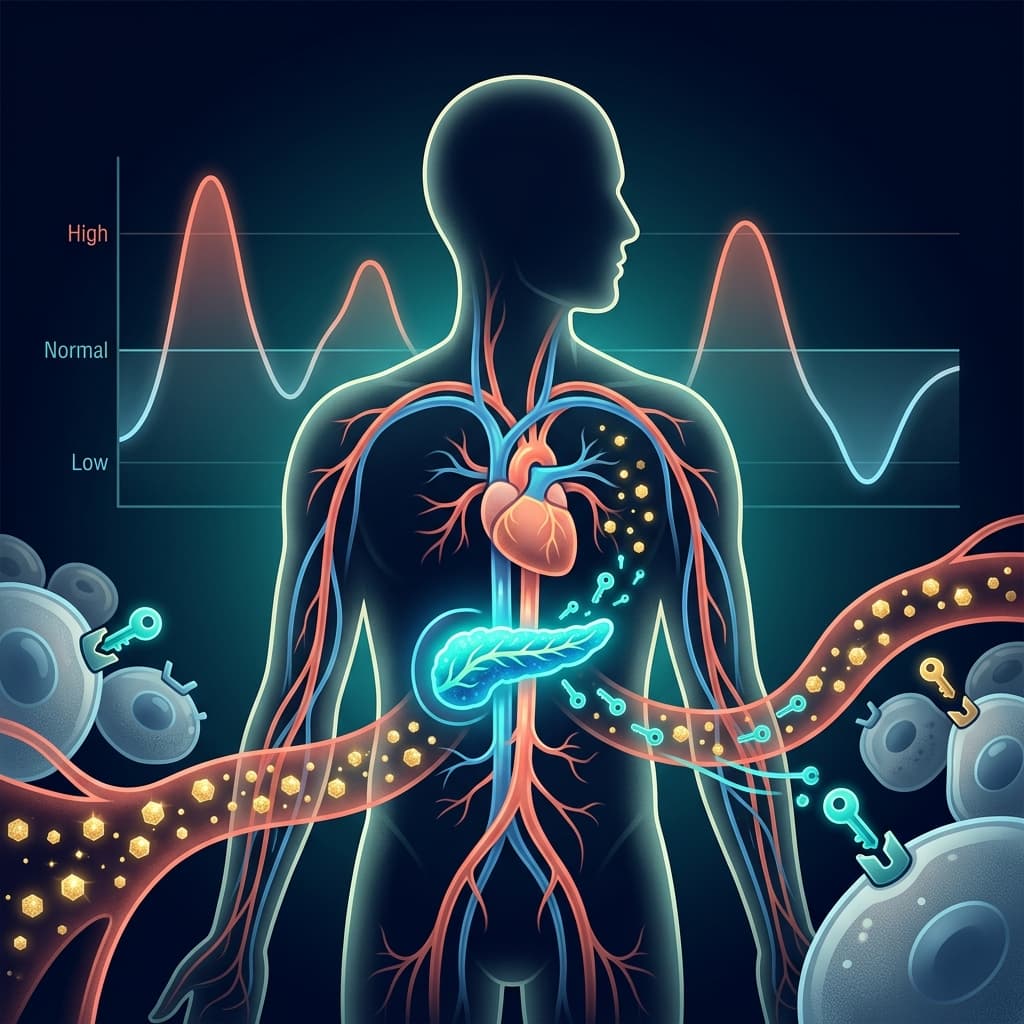
To understand insulin, imagine a simple scenario: You eat a plate of rice. Your digestive system breaks the carbohydrates in rice into glucose (sugar). This glucose enters your bloodstream, causing your blood sugar level to rise. Your pancreas detects this rise and releases insulin into the blood.
Now here's the crucial part — glucose cannot enter most cells on its own. Think of every cell in your body as a locked room, and glucose as a visitor standing outside. Insulin is the key. Each cell has a special receptor on its surface called the Insulin Receptor (IR). When insulin binds to this receptor (the key turns in the lock), it triggers a cascade of molecular signals inside the cell. This cascade activates a glucose transporter protein called GLUT4, which moves from inside the cell to the cell surface, creating a channel for glucose to enter.
The Key-and-Lock Analogy — Step by Step
How Insulin Unlocks Your Cells — Step-by-Step Process
| Step | What Happens | Analogy |
|---|---|---|
| 1. You eat food | Carbohydrates are digested into glucose in the small intestine | A delivery truck (food) arrives at the warehouse (body) |
| 2. Glucose enters blood | Glucose is absorbed into the bloodstream; blood sugar rises | Packages (glucose) are unloaded into the loading dock (bloodstream) |
| 3. Pancreas detects rise | Beta cells in the pancreas sense elevated blood glucose levels | The security system (pancreas) detects incoming packages |
| 4. Insulin is released | Beta cells secrete insulin into the bloodstream | The security guard (insulin) is dispatched with the master key |
| 5. Insulin binds to receptor | Insulin attaches to insulin receptors (IR) on cell surfaces | The key (insulin) is inserted into the lock (receptor) on each room (cell) |
| 6. GLUT4 channels open | GLUT4 glucose transporter proteins move to the cell surface | The door swings open — packages (glucose) can now enter the room (cell) |
| 7. Glucose enters cell | Glucose flows into the cell to be used as energy or stored as glycogen | Packages are received and stored inside the room |
| 8. Blood sugar normalizes | As cells absorb glucose, blood sugar levels return to normal (70–100 mg/dL) | The loading dock is cleared; security system stands down |
Where Does Glucose Go After Entering the Cell?
Once glucose enters a cell, it has three possible fates depending on the body's immediate energy needs:
Three Fates of Glucose Inside the Cell
| Destination | What Happens | When It Occurs | Storage Capacity |
|---|---|---|---|
| Immediate Energy (Glycolysis) | Glucose is broken down into pyruvate → enters mitochondria → produces ATP (energy currency) | During physical activity, thinking, breathing — any energy demand | Used immediately, not stored |
| Glycogen Storage (Liver & Muscles) | Excess glucose is polymerized into glycogen chains and stored in liver and skeletal muscle | After a meal when blood sugar is above normal but energy needs are met | ~100g in liver, ~400g in muscles (limited) |
| Fat Storage (Lipogenesis) | When glycogen stores are FULL, excess glucose is converted into fatty acids → stored as triglycerides in adipose tissue | Chronic overeating, high-carb diets, sedentary lifestyle | Virtually unlimited — this is why excess sugar leads to weight gain |
Critical Insight: Insulin is not just a 'sugar hormone' — it is also the body's primary fat-storage hormone. When insulin levels are chronically high, your body stays in fat-storage mode and cannot burn stored fat for energy. This is the root cause of weight gain in insulin resistance.
Part 3: What Is an Insulin Spike?
An insulin spike is a rapid, exaggerated surge of insulin released by the pancreas in response to a sharp rise in blood glucose. When you eat foods that are quickly digested and absorbed — like white rice, white bread, sugary drinks, or processed snacks — glucose floods into your bloodstream very fast. The pancreas responds by producing a large burst of insulin to bring blood sugar down quickly.
In a healthy person, this spike is temporary. But when insulin spikes happen repeatedly — meal after meal, day after day, year after year — the body's cells gradually become desensitized to insulin's signal. This is the beginning of insulin resistance.
What Triggers Insulin Spikes?
Common Insulin Spike Triggers — Ranked by Severity
| Trigger | Why It Causes a Spike | Spike Severity | Example |
|---|---|---|---|
| Sugary drinks (soda, packaged juice, chai with 3 spoons sugar) | Liquid sugar is absorbed almost instantly — no fiber to slow digestion | 🔴 Very High | A 350 ml Coca-Cola contains ~39g sugar = ~10 teaspoons |
| Refined carbohydrates (white bread, maida, white rice, naan) | Refined grains have had fiber stripped away; they behave like sugar in the body | 🔴 Very High | 2 rotis made from maida = blood sugar spike similar to 4 teaspoons sugar |
| Processed snacks (biscuits, chips, namkeen, instant noodles) | Combination of refined carbs + unhealthy fats = rapid glucose + prolonged insulin | 🟠 High | 1 packet of cream biscuits |
| Large meals eaten quickly | Eating a huge quantity at once overwhelms the digestive system with glucose | 🟠 High | Eating a full thali in 10 minutes |
| Eating carbs alone (without protein, fat, or fiber) | No protein/fat/fiber to slow gastric emptying = rapid glucose absorption | 🟡 Moderate | Plain rice without dal or vegetables |
| Stress and poor sleep | Cortisol (stress hormone) triggers the liver to release stored glucose | 🟡 Moderate | Chronic work stress, sleeping < 6 hours |
| Sedentary lifestyle (sitting all day) | Muscles are not consuming glucose, so it builds up in the blood | 🟡 Moderate | Desk job with no movement for 8+ hours |
Part 4: What Is Insulin Resistance? — The Broken Lock
Insulin resistance is a metabolic condition in which the body's cells — primarily in the liver, muscle, and fat tissue — stop responding properly to insulin's signal. Going back to our analogy: the key (insulin) is still being produced, but the locks (receptors) have become rusty, damaged, or jammed. The key no longer turns smoothly.
When cells resist insulin's signal, glucose cannot enter them efficiently. Blood sugar stays elevated. The pancreas responds by producing even MORE insulin — trying to force the locks open by flooding the system with more keys. This state of chronically elevated insulin is called hyperinsulinemia.
The Vicious Cycle of Insulin Resistance
Stage-by-Stage Progression of Insulin Resistance
| Stage | What Happens in the Body | Blood Sugar | Insulin Level | Symptoms |
|---|---|---|---|---|
| Stage 1: Early Resistance | Cells begin to resist insulin; pancreas compensates by producing more | Normal (70–100 mg/dL fasting) | 🔼 Elevated (but hidden — rarely tested) | Fatigue after meals, mild weight gain around belly, sugar cravings |
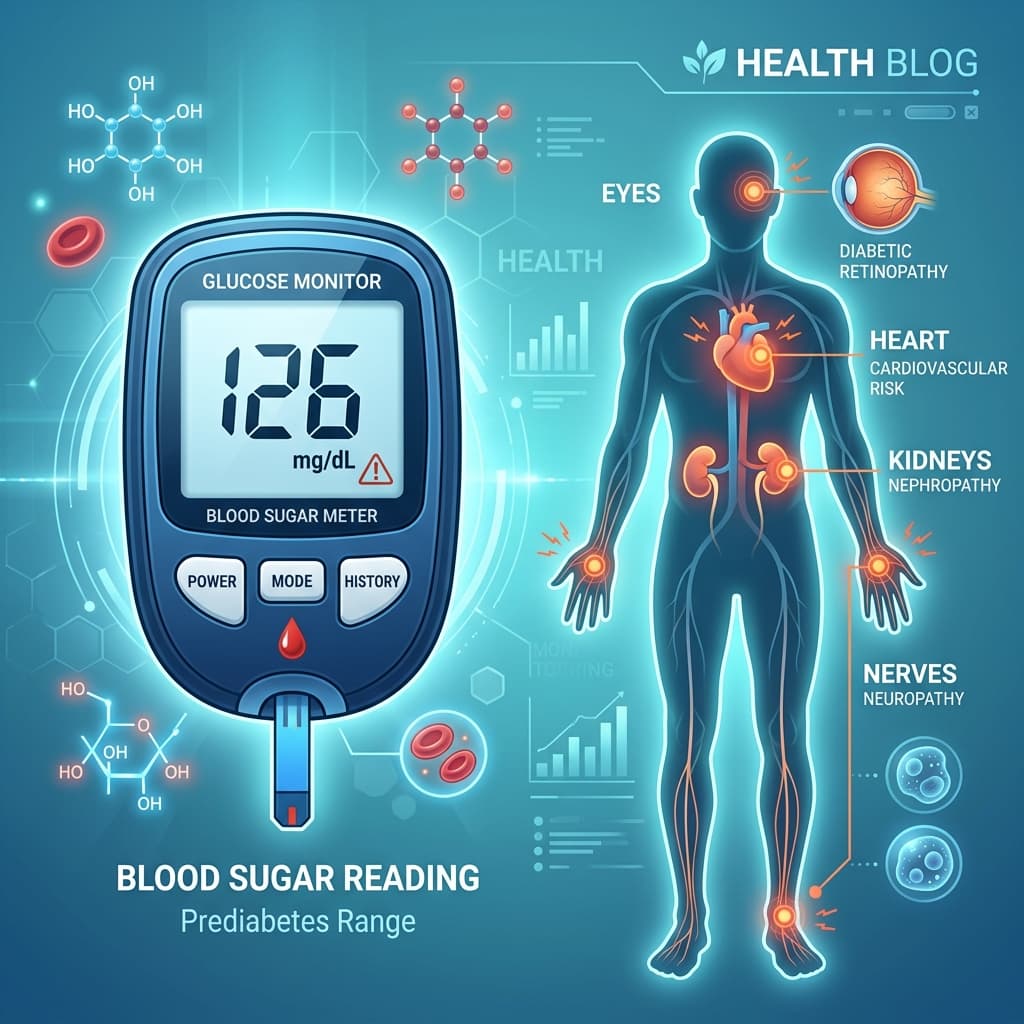
| Stage 2: Pre-Diabetes | Pancreas struggles to keep up; blood sugar starts rising above normal | Elevated (100–125 mg/dL fasting) | 🔼🔼 High | Increased thirst, frequent urination, brain fog, darkened skin patches (Acanthosis Nigricans) |
| Stage 3: Type 2 Diabetes | Pancreas can no longer compensate; blood sugar is consistently high | High (≥126 mg/dL fasting) | 🔼🔼🔼 Very High → eventually drops as beta cells fail | Blurred vision, slow wound healing, tingling in hands/feet, recurrent infections |
| Stage 4: Beta Cell Exhaustion | Beta cells burn out from years of overwork; insulin production declines | Very High (uncontrolled) | 🔽 Falling (beta cell failure) | Significant weight loss, severe fatigue, may need exogenous insulin injections |
Critical Warning: Insulin resistance is a SILENT condition. During Stage 1, your fasting blood sugar may appear completely normal because the pancreas is compensating by producing extra insulin. Standard blood sugar tests will miss it. Ask your doctor for a Fasting Insulin test or HOMA-IR calculation to detect early resistance BEFORE diabetes develops.
What Causes Insulin Resistance?
Root Causes of Insulin Resistance — Medical & Lifestyle Factors
| Cause | Mechanism | Reversible? |
|---|---|---|
| Visceral fat (belly fat) | Fat around organs releases inflammatory cytokines (TNF-α, IL-6) that block insulin receptor signaling | ✅ Yes — through weight loss and exercise |
| Chronic high-carb / high-sugar diet | Constant glucose floods → constant insulin spikes → receptors downregulate (become 'deaf' to insulin) | ✅ Yes — through dietary changes |
| Sedentary lifestyle | Inactive muscles have fewer GLUT4 transporters and lower glucose uptake capacity | ✅ Yes — exercise upregulates GLUT4 within hours |
| Chronic stress (high cortisol) | Cortisol triggers liver to release glucose (gluconeogenesis) and blocks insulin action | ✅ Yes — through stress management and sleep |
| Poor sleep (< 6 hours/night) | Sleep deprivation reduces insulin sensitivity by 25–30% within just one week | ✅ Yes — through sleep hygiene |
| Genetic predisposition | Family history of Type 2 diabetes increases baseline risk (South Asians have 2–4x higher risk) | ⚠️ Partially — genetics load the gun, lifestyle pulls the trigger |
| PCOS (Polycystic Ovary Syndrome) | Hormonal imbalance creates a feedback loop with insulin resistance | ✅ Yes — improves with weight loss, exercise, and medical management |
| Certain medications | Steroids, some antipsychotics, and beta-blockers can worsen insulin sensitivity | ⚠️ Discuss with your doctor — do not stop medications on your own |
Part 5: How to Lower Insulin Spikes — 12 Evidence-Based Strategies
Lowering insulin spikes does not mean eliminating carbohydrates entirely. It means eating smarter, moving more, and managing the speed at which glucose enters your blood. Here are 12 proven strategies ranked by impact:
Strategy 1: Eat Fiber First (The 'Veggie Starter' Rule)
Research published in Diabetes Care shows that eating vegetables and protein BEFORE carbohydrates in a meal can reduce the post-meal glucose spike by up to 73%. Fiber from vegetables creates a gel-like mesh in the stomach and small intestine that physically slows the absorption of glucose. Start every meal with a plate of salad, sabzi, or dal — then eat your roti or rice.
Strategy 2: Understand the Glycemic Index (GI) — Choose Low-GI Foods
The Glycemic Index (GI) ranks foods on a scale of 0–100 based on how quickly they raise blood sugar. Foods with a high GI (70+) cause rapid spikes; low-GI foods (≤55) release glucose slowly. Here's a practical reference table for common Indian foods:
Glycemic Index (GI) of Common Indian Foods
| Food Item | GI Score | GI Category | Insulin Spike Risk | Better Alternative |
|---|---|---|---|---|
| White rice (polished) | 73 | 🔴 High | High spike | Brown rice (GI 50) or hand-pounded rice |
| White bread / Pav | 75 | 🔴 High | High spike | Multigrain or ragi bread |
| Maida (refined flour) naan | 71 | 🔴 High | High spike | Whole wheat roti (GI 52) |
| Potato (boiled) | 78 | 🔴 High | High spike | Sweet potato (GI 44) or cauliflower |
| Corn flakes | 81 | 🔴 High | Very high spike | Steel-cut oats (GI 42) |
| Whole wheat roti | 52 | 🟡 Medium | Moderate spike | Ragi roti (GI 45) or jowar roti |
| Basmati rice | 58 | 🟡 Medium | Moderate spike | Pair with dal + salad to lower effective GI |
| Banana (ripe) | 62 | 🟡 Medium | Moderate spike | Apple (GI 36) or guava (GI 12) |
| Moong dal | 38 | 🟢 Low | Low spike | Excellent — high protein + fiber |
| Rajma (kidney beans) | 29 | 🟢 Low | Very low spike | Excellent — high fiber + protein |
| Paneer | 27 | 🟢 Low | Minimal spike | Great protein source with negligible GI |
| Eggs | 0 | 🟢 Very Low | No spike | Pure protein + fat — ideal for blood sugar stability |
| Nuts (almonds, walnuts) | 0–15 | 🟢 Very Low | No spike | Healthy fats slow glucose absorption |
Strategy 3: Add Protein and Fat to Every Meal
Protein and healthy fats slow gastric emptying — the rate at which food leaves your stomach. This means glucose is released into the bloodstream gradually rather than all at once. Example: Eating plain rice causes a sharp spike. Eating rice with dal (protein) + ghee (fat) + sabzi (fiber) produces a much flatter, gentler blood sugar curve. Always combine your carbohydrates with protein and fat.
Strategy 4: Walk After Meals (The 10-Minute Rule)
A 2022 meta-analysis in the journal Sports Medicine found that just 10 minutes of light walking after a meal reduces post-meal blood sugar spikes by up to 22%. Walking activates the GLUT4 transporter proteins in your muscles through a pathway that does NOT require insulin — meaning your muscles absorb glucose directly from the blood during movement. This is one of the most powerful and immediate tools available.
Strategy 5: Use Apple Cider Vinegar (ACV) Before Meals
Studies published in the European Journal of Clinical Nutrition show that consuming 1–2 tablespoons of apple cider vinegar diluted in water before a carbohydrate-rich meal can reduce the post-meal glucose spike by 20–34%. The acetic acid in vinegar slows the enzyme alpha-amylase (which digests starch), delaying carbohydrate breakdown and glucose absorption. Dilute in water to protect tooth enamel.
Strategy 6: Stop Drinking Your Calories
Liquid calories are the single worst offender for insulin spikes. When you drink fruit juice, soda, sweetened chai, or energy drinks, the sugar hits your bloodstream within minutes — there is no fiber, no chewing, no slow digestion. A single glass of packaged orange juice contains roughly 26g of sugar and zero fiber, producing an insulin spike nearly identical to drinking sugar water. Switch to whole fruits, plain water, black coffee, or unsweetened green tea.
Strategy 7: Practice Time-Restricted Eating (12–16 Hour Overnight Fast)
Allowing your body a 12–16 hour window overnight without food gives insulin levels time to fall back to baseline. During this fasting window, insulin drops low enough for the body to switch from glucose-burning to fat-burning mode. You don't need extreme fasting — simply finishing dinner by 7–8 PM and eating breakfast at 8–9 AM gives you a natural 12–13 hour fast. Research from Cell Metabolism (2018) showed this simple change improved insulin sensitivity by 25% in pre-diabetic subjects within 5 weeks.
Strategy 8: Prioritize Sleep (7–8 Hours, Non-Negotiable)
A landmark study from the University of Chicago showed that restricting sleep to 4–5 hours per night for just ONE WEEK reduced insulin sensitivity by 25–30%. Poor sleep increases cortisol, increases ghrelin (hunger hormone), decreases leptin (satiety hormone), and directly impairs insulin receptor function. Sleep is not a luxury — it is a metabolic necessity.
Strategy 9: Build Muscle (Resistance Training)
Skeletal muscle is the largest glucose sink in the body — it absorbs roughly 80% of all glucose after a meal. The more muscle mass you have, the more glucose your body can absorb without needing excessive insulin. Resistance training (bodyweight exercises, weight lifting, resistance bands) increases the number and sensitivity of GLUT4 transporters in muscle cells. Even 2–3 sessions per week of 30 minutes creates measurable improvements in insulin sensitivity within 2–4 weeks.
Strategy 10: Manage Stress (Lower Cortisol)
Chronic psychological stress keeps cortisol levels elevated. Cortisol directly opposes insulin — it tells the liver to release glucose into the blood (gluconeogenesis) even when you haven't eaten. This means stress alone can raise your blood sugar and trigger insulin spikes. Techniques that lower cortisol: daily 10-minute meditation or pranayama, spending time in nature, limiting social media doomscrolling, and maintaining social connections.
Strategy 11: Add Cinnamon, Fenugreek & Chromium
Several natural compounds have clinical evidence supporting their role in improving insulin sensitivity. Ceylon cinnamon (1/2 teaspoon daily) has been shown to reduce fasting blood glucose by 10–29% in multiple meta-analyses. Fenugreek seeds (methi) — soaking 1 tablespoon overnight and consuming in the morning — slow gastric emptying and improve glucose tolerance. Chromium picolinate supplementation improves insulin receptor binding. Always consult your physician before starting supplements.
Strategy 12: Monitor Your Numbers
You cannot improve what you do not measure. Ask your doctor for these tests periodically to track your insulin health:
Essential Blood Tests for Insulin Health Monitoring
| Test | What It Measures | Optimal Range | Frequency |
|---|---|---|---|
| Fasting Blood Glucose | Blood sugar level after 8–12 hours of fasting | 70–100 mg/dL (< 90 mg/dL ideal) | Every 3–6 months |
| HbA1c (Glycated Hemoglobin) | Average blood sugar over the past 3 months | < 5.7% (non-diabetic); < 6.5% (diabetic target) | Every 3–6 months |
| Fasting Insulin | Insulin level after fasting — detects early resistance even when sugar is normal | 2–6 µIU/mL (ideal); > 10 µIU/mL suggests resistance | Annually (or as advised) |
| HOMA-IR | Calculated score using fasting glucose + fasting insulin to quantify resistance | < 1.0 (optimal); 1.0–2.0 (early resistance); > 2.5 (significant resistance) | Annually |
| Triglycerides | Type of fat in the blood — elevated by excess insulin | < 150 mg/dL | Every 6–12 months |
| Triglyceride/HDL Ratio | Powerful proxy marker for insulin resistance | < 2.0 (ideal); > 3.0 (suggests resistance) | Every 6–12 months |
Part 6: How to Reverse Insulin Resistance — Becoming Insulin Sensitive Again
The good news: insulin resistance is REVERSIBLE in most cases. Unlike Type 1 Diabetes (where the immune system destroys beta cells permanently), insulin resistance is primarily a lifestyle-driven condition that responds dramatically to behavior changes. Here is a week-by-week roadmap:
8-Week Insulin Sensitivity Restoration Roadmap
| Week | Focus Area | Action Steps | Expected Change |
|---|---|---|---|
| Week 1–2 | Eliminate liquid sugar | Cut all sodas, packaged juices, sweetened chai/coffee. Replace with water, black coffee, green tea, buttermilk. | Fasting insulin begins to drop; energy stabilizes |
| Week 2–3 | Restructure meals | Eat vegetables/protein first, carbs last. Add dal/paneer/eggs to every meal. Use the 'Veggie Starter' rule. | Post-meal sugar spikes reduce by 30–50% |
| Week 3–4 | Add post-meal walks | Walk 10–15 minutes after lunch and dinner. No intense exercise needed — light walking works. | Muscle GLUT4 activation; immediate glucose clearance |
| Week 4–5 | Fix sleep schedule | Set a consistent bedtime. Aim for 7–8 hours. No screens 1 hour before bed. Dark, cool room. | Cortisol normalizes; insulin sensitivity improves by 20–25% |
| Week 5–6 | Start resistance training | Begin with bodyweight exercises (squats, push-ups, planks) 3x/week, 20–30 minutes. | Muscle glucose uptake increases; GLUT4 density improves |
| Week 6–7 | Implement time-restricted eating | Finish dinner by 7:30 PM. First meal at 8–9 AM. 12–13 hour overnight fast. | Fasting insulin drops significantly; body enters fat-burning mode |
| Week 7–8 | Stress management | Add 10 minutes of daily meditation, pranayama, or journaling. Reduce screen time before bed. | Cortisol levels reduce; insulin receptor sensitivity improves |
| Week 8+ | Sustain and monitor | Re-test fasting insulin, HbA1c, HOMA-IR. Adjust plan with your doctor. Make these habits permanent. | Measurable improvement in all markers. Many patients move from pre-diabetes back to normal. |
Part 7: Insulin Sensitivity vs. Insulin Resistance — A Side-by-Side Comparison
Understanding the difference between insulin sensitivity and insulin resistance is key to knowing where you stand and where you need to go:
Insulin Sensitive vs. Insulin Resistant — Complete Comparison
| Parameter | Insulin Sensitive (Healthy) | Insulin Resistant (Unhealthy) |
|---|---|---|
| Insulin needed to clear glucose | Small amount — cells respond quickly to even small amounts of insulin | Large amount — cells are 'deaf' to insulin, requiring ever-increasing amounts |
| Fasting insulin level | 2–6 µIU/mL | > 10 µIU/mL (often 15–25+) |
| Blood sugar after meals | Returns to baseline within 1–2 hours | Stays elevated for 3–4+ hours |
| Energy after eating | Steady, sustained energy — no crash | Energy spike followed by crash, brain fog, sleepiness |
| Body composition | Lean, especially around the midsection | Excess visceral fat (belly fat), difficulty losing weight |
| Hunger patterns | Satiated between meals; no intense cravings | Constant hunger, sugar/carb cravings, 'hangry' episodes |
| Fat burning ability | Body easily switches between burning glucose and burning fat | Body is stuck in glucose-burning mode; cannot access stored fat |
| Inflammation markers | Low CRP, low IL-6, low TNF-α | Elevated CRP, IL-6, TNF-α — chronic low-grade inflammation |
| Disease risk | Low risk of Type 2 Diabetes, heart disease, PCOS, fatty liver | High risk of Type 2 Diabetes, cardiovascular disease, PCOS, NAFLD, Alzheimer's |
| Skin signs | Normal skin tone in folds | Acanthosis Nigricans — darkened, velvety patches on neck, armpits, groin |
Part 8: A Sample Day — Insulin-Friendly Indian Meal Plan
Here is a practical, Indian-kitchen-friendly meal plan designed to keep insulin levels stable throughout the day:
Sample Insulin-Friendly Indian Meal Plan
| Time | Meal | What to Eat | Why It Works |
|---|---|---|---|
| 7:00 AM | Morning Drink | 1 glass warm water + 1 tbsp ACV (or methi soaked water) | Primes digestion; acetic acid improves insulin sensitivity |
| 8:00 AM | Breakfast | 2 boiled eggs + 1 multigrain roti + cucumber-tomato salad (or: moong dal chilla + mint chutney) | High protein + fiber first; low GI carbs; no sugar spike |
| 10:30 AM | Mid-morning snack | 10 almonds + 1 small guava (or apple) | Healthy fats + low-GI fruit; prevents mid-morning energy crash |
| 1:00 PM | Lunch | Start: Large bowl of salad or sabzi → Then: 1 small bowl dal + 1–2 roti (whole wheat/jowar) + curd | Veggie-first rule; protein + fiber + fermented food (curd) |
| 1:15 PM | Post-lunch walk | 10–15 minute walk at easy pace | GLUT4 activation; clears glucose without needing insulin |
| 4:00 PM | Evening snack | 1 cup unsweetened green tea + handful of roasted chana or makhana | Fiber + crunch without sugar; green tea contains EGCG (insulin sensitizer) |
| 7:00 PM | Dinner (early) | Grilled paneer/chicken + sautéed vegetables + 1 small roti (or skip roti, increase sabzi) | Protein-heavy dinner; minimal carbs in the evening when insulin sensitivity is naturally lower |
| 7:15 PM | Post-dinner walk | 10–15 minute walk | Prevents overnight glucose elevation |
| 9:30 PM | Pre-bed | No food. Herbal tea (chamomile) if needed. Begin 12-hour fasting window. | Allows insulin to fall to baseline; enables overnight fat burning |
When to See a Doctor
Consult a physician at Sanjivani Hospital's Diabetology or General Medicine department if you experience any of the following:
- Darkened skin patches (Acanthosis Nigricans) on the neck, armpits, or groin — a classic sign of insulin resistance
- Persistent fatigue, brain fog, or extreme sleepiness after meals despite adequate sleep
- Inability to lose weight despite diet and exercise — especially belly fat that won't budge
- Fasting blood sugar above 100 mg/dL or HbA1c above 5.7% on any test
- Family history of Type 2 Diabetes combined with any of the above symptoms
- PCOS diagnosis with irregular periods, acne, and weight gain
- You are pre-diabetic and want a structured reversal plan
Sanjivani Hospital's Diabetology department offers comprehensive insulin resistance screening, including fasting insulin, HOMA-IR calculation, HbA1c, lipid profiles, and personalized lifestyle intervention plans. Our dietitians work alongside endocrinologists to create practical, Indian-diet-compatible plans that help patients reverse pre-diabetes and improve metabolic health. Early detection and intervention can prevent the progression from insulin resistance to Type 2 Diabetes.