
Piles — medically known as hemorrhoids — are one of the most common yet under-discussed health conditions in India. Studies estimate that nearly 50% of adults over the age of 50 experience hemorrhoidal symptoms at some point, and the prevalence in India may be even higher due to dietary habits, sedentary lifestyles, and the cultural stigma that prevents early medical consultation.
Despite being incredibly common, many people suffer in silence for months or even years, relying on misinformation, unproven home cures, or simply ignoring the problem. The reality is that piles are highly treatable — and in many cases, completely preventable. Early intervention can save you from significant pain, bleeding, and the need for invasive surgery.
This comprehensive guide covers everything you need to know: what piles actually are, why they develop, how to distinguish between different types and grades, effective home remedies backed by evidence, when to see a doctor, and the full spectrum of medical and surgical treatment options available today.
What Exactly Are Piles (Hemorrhoids)?
Hemorrhoids are swollen, inflamed blood vessels (veins and venous cushions) located in the lower rectum and anus. These vascular cushions are a normal part of human anatomy — everyone has them. They play a critical role in maintaining continence by forming soft, blood-filled pads that help keep the anal canal sealed.
The problem arises when these vascular cushions become abnormally enlarged, stretched, or inflamed due to excessive straining, increased pressure, or weakening of the supporting tissue. When this happens, we refer to the condition as 'piles' or 'hemorrhoids' in the clinical sense — and symptoms like bleeding, pain, itching, and prolapse begin to appear.
IMPORTANT DISTINCTION: Hemorrhoidal tissue itself is normal and healthy. 'Piles' is the term we use when these tissues become pathologically enlarged and symptomatic. Not every person who has hemorrhoidal tissue has 'piles' — only when symptoms develop does it become a medical condition.
Types of Piles: Internal vs External
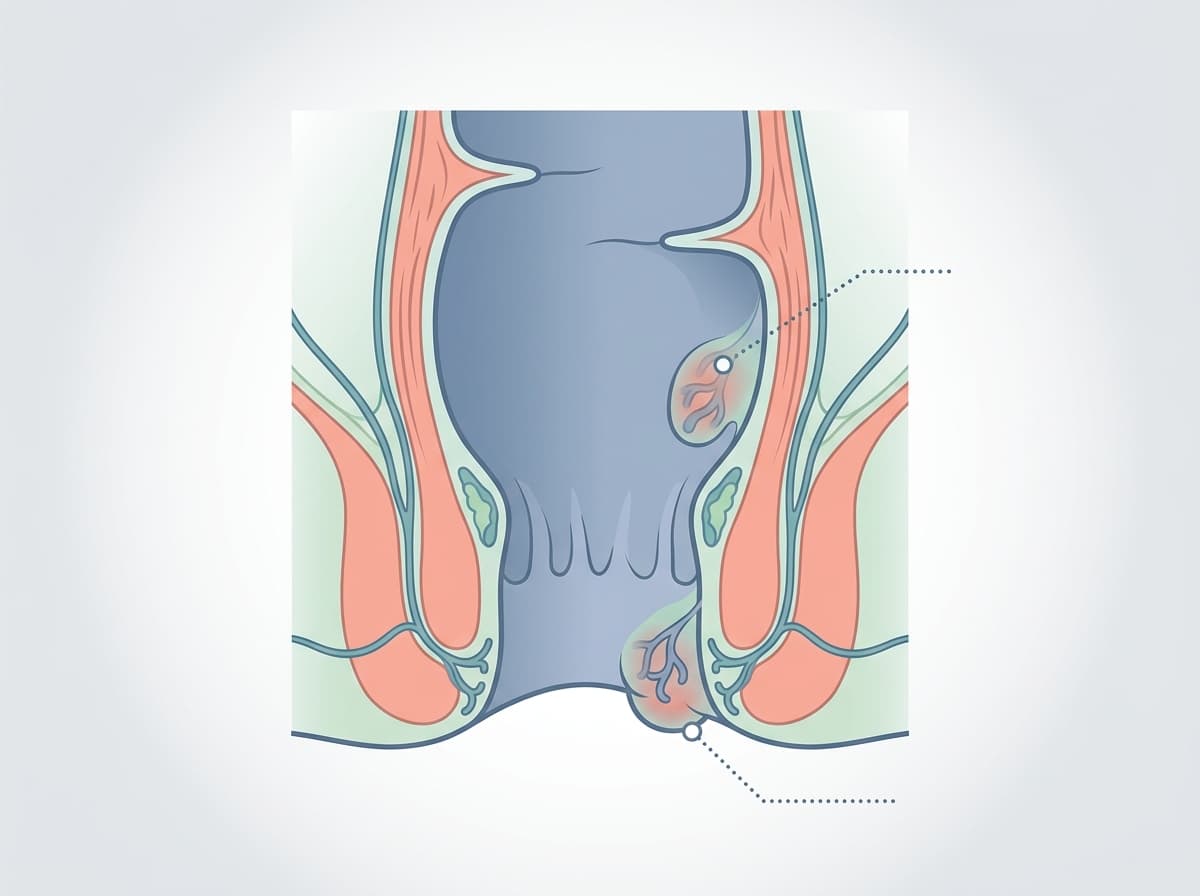
Hemorrhoids are classified into two primary types based on their anatomical location relative to the dentate line (also called the pectinate line) — an anatomical landmark inside the anal canal that separates the upper and lower portions:
1. Internal Hemorrhoids
Located above the dentate line, inside the rectum. Internal hemorrhoids are covered by mucosal lining and are typically painless because this area lacks somatic pain nerve fibres. Their most common symptom is bright red, painless bleeding during bowel movements — often noticed as streaks of blood on toilet paper or in the toilet bowl.
Internal hemorrhoids are graded from Grade I to Grade IV based on the degree of prolapse (how much they protrude from the anal canal):
Grading System for Internal Hemorrhoids
| Grade | Description | Prolapse Status | Typical Treatment |
|---|---|---|---|
| Grade I | Hemorrhoids are enlarged but do not prolapse. Bleeding may occur during bowel movements. | No prolapse | Dietary modification, fibre supplements, topical treatments |
| Grade II | Hemorrhoids prolapse during straining but spontaneously reduce (retract back inside) on their own. | Prolapse with spontaneous reduction | Rubber band ligation, sclerotherapy, lifestyle changes |
| Grade III | Hemorrhoids prolapse during straining and must be manually pushed back inside. | Prolapse requiring manual reduction | Rubber band ligation, infrared coagulation, or surgery |
| Grade IV | Hemorrhoids are permanently prolapsed and cannot be pushed back inside. Risk of strangulation and thrombosis. | Irreducible prolapse | Surgical excision (hemorrhoidectomy) or stapled hemorrhoidopexy |
2. External Hemorrhoids
Located below the dentate line, under the skin around the anus. External hemorrhoids are covered by skin (not mucosa) and are supplied by somatic nerves, which means they can be very painful — especially when they develop a blood clot (thrombosis). A thrombosed external hemorrhoid appears as a firm, bluish, intensely painful lump at the anal margin.
WHEN TO SEEK IMMEDIATE HELP: A thrombosed external hemorrhoid (hard, purple-blue, extremely painful swelling at the anus) that develops suddenly should be evaluated within 48–72 hours. If treated early, a simple incision and drainage can provide immediate relief. Delayed treatment may mean longer recovery.
Common Causes and Risk Factors
Piles develop when there is increased pressure on the veins in the lower rectum and anus. This pressure can build up gradually over time or arise from acute events. Understanding the root causes is essential for both treatment and prevention:
Primary causes and risk factors include:
- Chronic constipation — Hard stools require excessive straining during bowel movements, which puts direct pressure on the hemorrhoidal veins and stretches the supporting connective tissue
- Chronic diarrhoea — Frequent loose stools and the constant bearing-down pressure irritate and inflame the anal lining
- Prolonged sitting on the toilet — Spending more than 5–10 minutes on the toilet (often while scrolling phones) creates sustained downward pressure on the pelvic floor
- Low-fibre diet — Indian urban diets often lack sufficient roughage, leading to hard, dry stools. Adults need 25–35 grams of fibre daily; most Indians consume less than 15 grams
- Sedentary lifestyle — Sitting for prolonged periods (desk jobs, long commutes) reduces blood flow in the pelvic region and weakens supporting muscles
- Pregnancy — The growing uterus compresses pelvic veins, and hormonal changes relax vein walls. Up to 35% of pregnant women develop hemorrhoids, especially in the third trimester
- Obesity — Excess abdominal weight increases intra-abdominal pressure, which is transmitted to the rectal veins
- Heavy lifting — Regularly lifting heavy weights (at the gym or workplace) without proper breathing technique causes repeated spikes in abdominal pressure
- Ageing — The connective tissue supporting hemorrhoidal veins weakens with age, making prolapse more likely after 40–50 years
- Genetics — A family history of hemorrhoids increases your susceptibility, possibly due to inherited weakness of vein walls or connective tissue
- Spicy food — While spicy food does not directly cause piles, it can irritate the anal mucosa during passage, worsening symptoms in those who already have hemorrhoids
Recognising the Symptoms: When Is It Piles?
The symptoms of piles vary based on type (internal vs external), grade, and severity. Some people have hemorrhoids without any symptoms at all, while others experience significant discomfort. Here are the most common signs to watch for:
Key symptoms of hemorrhoids:
- Painless rectal bleeding — The most common symptom of internal hemorrhoids. Bright red blood on toilet paper, dripping into the bowl, or coating the stool surface. The blood is typically bright red (not dark or mixed into the stool)
- Anal itching (pruritus ani) — Mucus discharge from internal hemorrhoids irritates the perianal skin, causing persistent itching and discomfort
- A lump or swelling near the anus — External hemorrhoids or prolapsed internal hemorrhoids may be felt as a soft or firm mass at the anal opening
- Pain or discomfort — More common with external hemorrhoids, thrombosed hemorrhoids, or strangulated prolapsed hemorrhoids. Internal hemorrhoids are usually painless
- Mucus discharge — A clear or slightly cloudy mucus leaking from the anus, especially after bowel movements
- Feeling of incomplete evacuation — Large internal hemorrhoids can create a sensation that the bowel hasn't been fully emptied, leading to further straining
- Soiling of undergarments — Due to mucus discharge or difficulty in cleaning the anal area when external skin tags or prolapse are present
RED FLAG: While rectal bleeding is commonly caused by hemorrhoids, it can also be a symptom of more serious conditions including colorectal polyps, inflammatory bowel disease (IBD), or colorectal cancer. Any rectal bleeding should be evaluated by a doctor — especially if you are over 40, have a family history of colorectal cancer, notice dark/tarry stools, experience unexplained weight loss, or if bleeding persists despite treatment.
Home Remedies and Self-Care: Your First Line of Defence
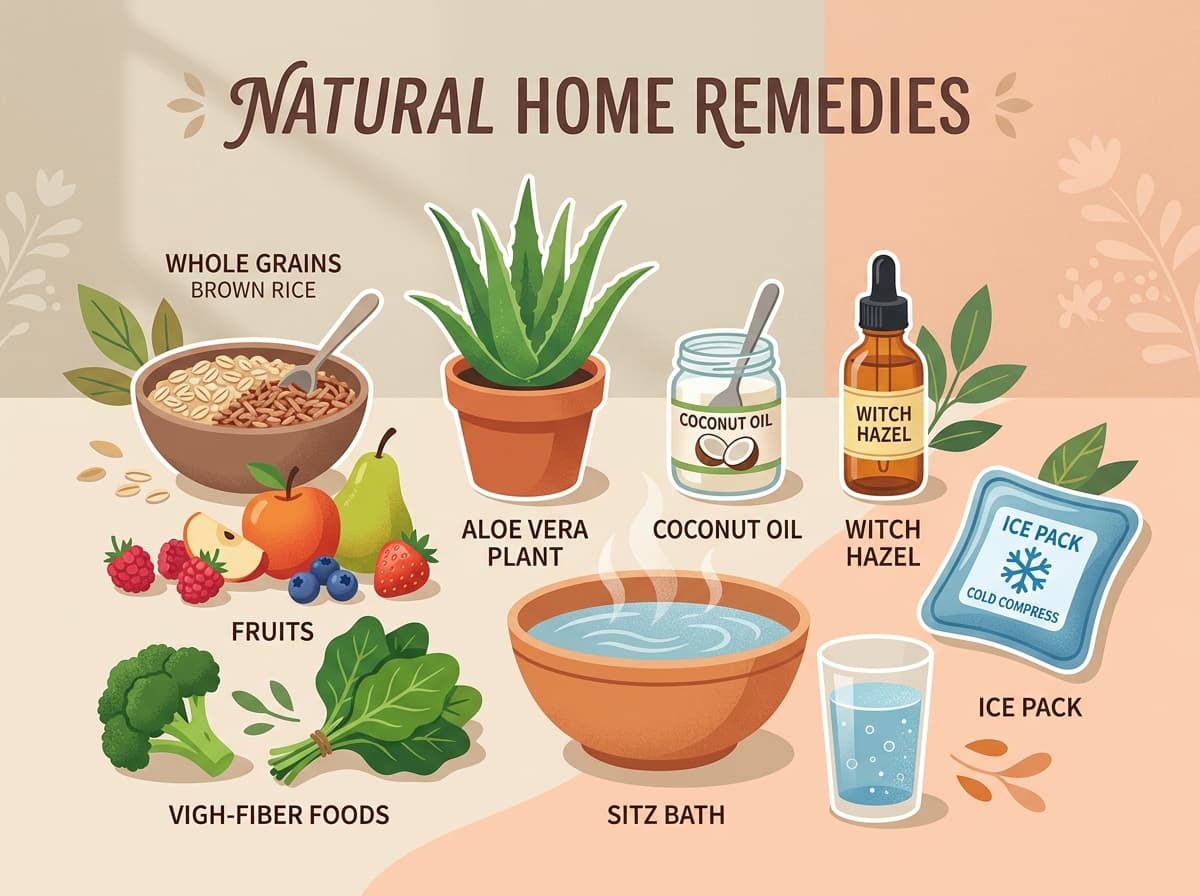
The good news is that most Grade I and Grade II hemorrhoids can be managed effectively with lifestyle changes, dietary adjustments, and simple home remedies. These conservative measures should always be the first approach before considering medical or surgical interventions:
1. Increase Your Dietary Fibre Intake
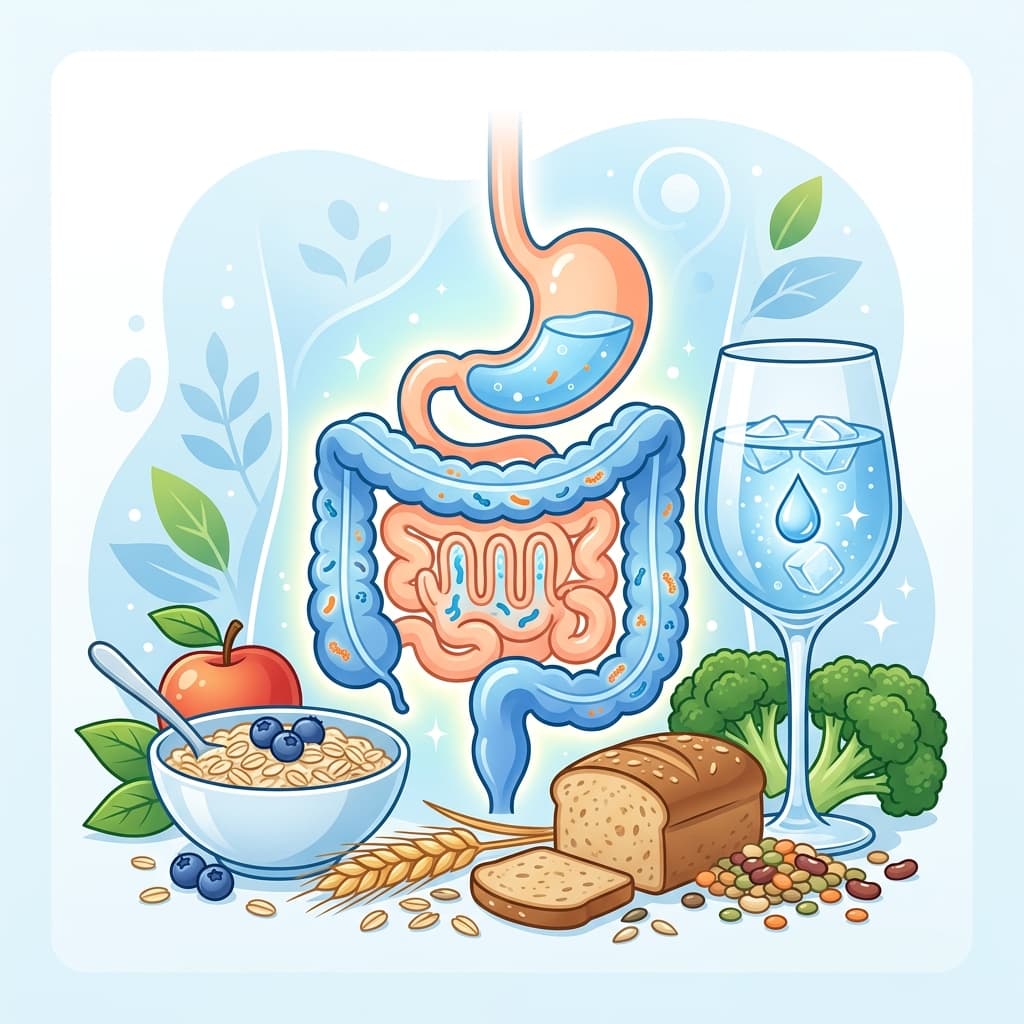
This is the single most important lifestyle change for both treating and preventing piles. Fibre softens the stool, adds bulk, and makes it easier to pass without straining. Aim for 25–35 grams of fibre daily from a combination of sources:
High-Fibre Food Sources — Daily Reference Chart
| Food Group | Examples | Fibre per Serving (approx.) | Serving Size |
|---|---|---|---|
| Whole Grains | Oats, brown rice, whole wheat roti, ragi, bajra | 3–5 g | 1 bowl / 2 rotis |
| Pulses & Legumes | Rajma, chana, moong, masoor dal, lobia | 6–9 g | 1 cup cooked |
| Vegetables | Broccoli, spinach, carrots, peas, beans, lauki, bhindi | 3–5 g | 1 cup cooked |
| Fruits | Guava, apple (with skin), pear, papaya, banana, berries | 3–5 g | 1 medium fruit |
| Seeds & Nuts | Flaxseeds, chia seeds, almonds, walnuts | 3–4 g | 1–2 tablespoons |
| Fibre Supplements | Isabgol (psyllium husk), methylcellulose | 5–7 g | 1 tablespoon in water |
PRO TIP: When increasing fibre intake, do so gradually over 1–2 weeks and drink plenty of water alongside. A sudden jump in fibre without adequate hydration can actually cause bloating, gas, and worsen constipation.
2. Stay Hydrated
Drink at least 8–10 glasses (2–2.5 litres) of water daily. Adequate hydration works synergistically with fibre to keep stools soft and easy to pass. Reduce excess tea, coffee, and alcohol — these are mild diuretics that can contribute to dehydration and harder stools.
3. Sitz Baths — The Gold Standard Home Remedy
A sitz bath involves sitting in warm (not hot) water for 15–20 minutes, allowing the water to cover only the buttocks and hips. This is one of the most effective, evidence-backed home treatments for hemorrhoid relief:
How to take a sitz bath correctly:
- Fill a clean bathtub or dedicated sitz bath basin (available at pharmacies) with warm water (37–40°C)
- Optionally add 1–2 tablespoons of Epsom salt for enhanced muscle relaxation
- Sit in the water for 15–20 minutes, allowing the perineal area to soak
- Gently pat the area dry with a soft, clean towel — do not rub
- Repeat 2–3 times daily, especially after bowel movements
- The warm water increases blood flow, relaxes the internal sphincter, reduces swelling, and provides significant relief from pain and itching
4. Topical Treatments (Over-the-Counter)
Several OTC creams, ointments, and suppositories can provide temporary symptomatic relief. These typically contain ingredients like hydrocortisone (reduces inflammation), lidocaine (numbs pain), witch hazel (astringent), or zinc oxide (forms a protective barrier). Common brands in India include Pilex ointment, Anovate cream, and Proctosedyl. These should be used short-term (7–10 days) — prolonged steroid use can thin the perianal skin.
5. Cold Compresses
Applying an ice pack wrapped in a clean cloth to the anal area for 10–15 minutes can reduce swelling and numb pain, especially for thrombosed or inflamed external hemorrhoids. Alternate with sitz baths for best results.
6. Adopt Healthy Toilet Habits
Simple habits that make a big difference:
- Don't delay — Go to the toilet as soon as you feel the urge. Delaying bowel movements leads to harder, drier stools
- Don't strain — If you can't pass the stool within 5 minutes, get up and try again later
- Limit toilet time — Avoid reading, scrolling your phone, or sitting on the toilet for more than 5–10 minutes
- Use a footstool — Elevating your feet 15–20 cm while sitting on the toilet mimics a squatting position, straightens the anorectal angle, and makes evacuation easier and more natural
- Use moist wipes — After bowel movements, use unscented, alcohol-free moist wipes or wash with water instead of dry toilet paper, which can irritate inflamed tissues
7. Natural Remedies
Some natural ingredients that may provide supplementary relief:
- Aloe vera gel — Pure aloe vera has anti-inflammatory properties. Apply fresh aloe gel directly to external hemorrhoids for soothing relief
- Coconut oil — Acts as a natural moisturiser and has mild anti-inflammatory effects. Can be applied topically to reduce irritation
- Witch hazel — A natural astringent available as pre-soaked pads. Helps shrink swollen tissue and reduces itching
- Triphala powder — An Ayurvedic formulation (amla, bibhitaki, haritaki) traditionally used as a mild laxative. Take 1 teaspoon with warm water at bedtime
When to See a Doctor: Don't Wait Too Long
While home remedies work well for mild cases, you should consult a doctor — ideally a general surgeon or proctologist — if:
- Symptoms persist for more than 1–2 weeks despite consistent home treatment
- You experience significant or recurrent rectal bleeding
- You notice a hard, painful lump at the anus (possible thrombosed hemorrhoid)
- The hemorrhoid prolapses and cannot be pushed back (Grade IV)
- You are over 40 years old and experiencing rectal bleeding for the first time (to rule out other causes)
- You experience fever, severe pain, or inability to pass stool (possible strangulated hemorrhoid — this is a medical emergency)
- The condition is significantly affecting your daily life, work, or mental well-being
Medical and Surgical Treatment Options
When conservative measures are insufficient, a range of minimally invasive and surgical procedures are available. The choice of treatment depends on the type, grade, severity, and patient's overall health. Here's a comprehensive overview:
Minimally Invasive Procedures (Office-Based)
These procedures are typically performed on an outpatient basis (you go home the same day), require little to no anaesthesia, and have quick recovery times. They are most effective for Grade I–III internal hemorrhoids.
Minimally Invasive Treatment Options for Hemorrhoids
| Procedure | How It Works | Best For | Recovery Time | Success Rate |
|---|---|---|---|---|
| Rubber Band Ligation (RBL) | A small elastic band is placed at the base of the internal hemorrhoid, cutting off its blood supply. The banded tissue withers and falls off within 5–7 days. | Grade I–III internal hemorrhoids | 1–3 days of mild discomfort | 70–80% cure rate |
| Sclerotherapy | A chemical solution (phenol in oil or sodium tetradecyl sulfate) is injected into the hemorrhoidal tissue, causing it to shrink and scar. | Small Grade I–II internal hemorrhoids, patients on blood thinners | Minimal — same day return to activity | 70% for Grade I–II |
| Infrared Coagulation (IRC) | A beam of infrared light is directed at the hemorrhoidal tissue, causing coagulation (clotting) and shrinkage. Usually requires 3–4 sessions. | Small Grade I–II internal hemorrhoids | Minimal | 65–75% |
| Laser Hemorrhoidoplasty (HeLP/LHP) | A laser fibre is inserted into the hemorrhoidal tissue, delivering controlled energy to shrink the blood supply. Minimally invasive with less post-operative pain. | Grade II–III internal hemorrhoids | 1–2 days | 85–90% |
Surgical Procedures (For Severe Cases)
Surgery is reserved for Grade III–IV hemorrhoids, large external hemorrhoids, thrombosed hemorrhoids that don't respond to conservative treatment, and recurrent hemorrhoids. Modern surgical techniques have significantly reduced post-operative pain and recovery time compared to traditional approaches.
Surgical Treatment Options for Advanced Hemorrhoids
| Procedure | How It Works | Best For | Recovery Time | Key Advantage |
|---|---|---|---|---|
| Open Hemorrhoidectomy (Milligan-Morgan) | The hemorrhoidal tissue is surgically excised, leaving the wound open to heal by secondary intention. The 'gold standard' for severe hemorrhoids. | Grade III–IV, large external, mixed hemorrhoids | 2–4 weeks | Lowest recurrence rate (< 5%) |
| Closed Hemorrhoidectomy (Ferguson) | Similar to open technique but the wound is sutured closed after excision. | Grade III–IV hemorrhoids | 2–3 weeks | Faster wound healing than open technique |
| Stapled Hemorrhoidopexy (PPH / Longo procedure) | A circular stapling device removes a ring of excess hemorrhoidal tissue and repositions the remaining tissue back to its normal location. Less pain than traditional hemorrhoidectomy. | Circumferential Grade III internal hemorrhoids | 5–7 days | Significantly less post-operative pain |
| Doppler-Guided HAL-RAR | Hemorrhoidal Artery Ligation and Recto-Anal Repair — uses Doppler ultrasound to identify and ligate the arteries feeding the hemorrhoids, then plicates (folds) the prolapsed tissue back in place. | Grade II–III with prolapse | 3–5 days | No tissue excision — preserves anatomy |
| Thrombectomy | Incision and drainage of a thrombosed external hemorrhoid under local anaesthesia. Simple, quick office procedure. | Acute thrombosed external hemorrhoids (within 72 hours) | 1–2 days | Immediate pain relief |
Prevention: 10 Habits to Keep Piles Away for Good
Whether you've never had piles or have been successfully treated, these evidence-backed lifestyle habits will significantly reduce your risk of developing or recurring hemorrhoids:
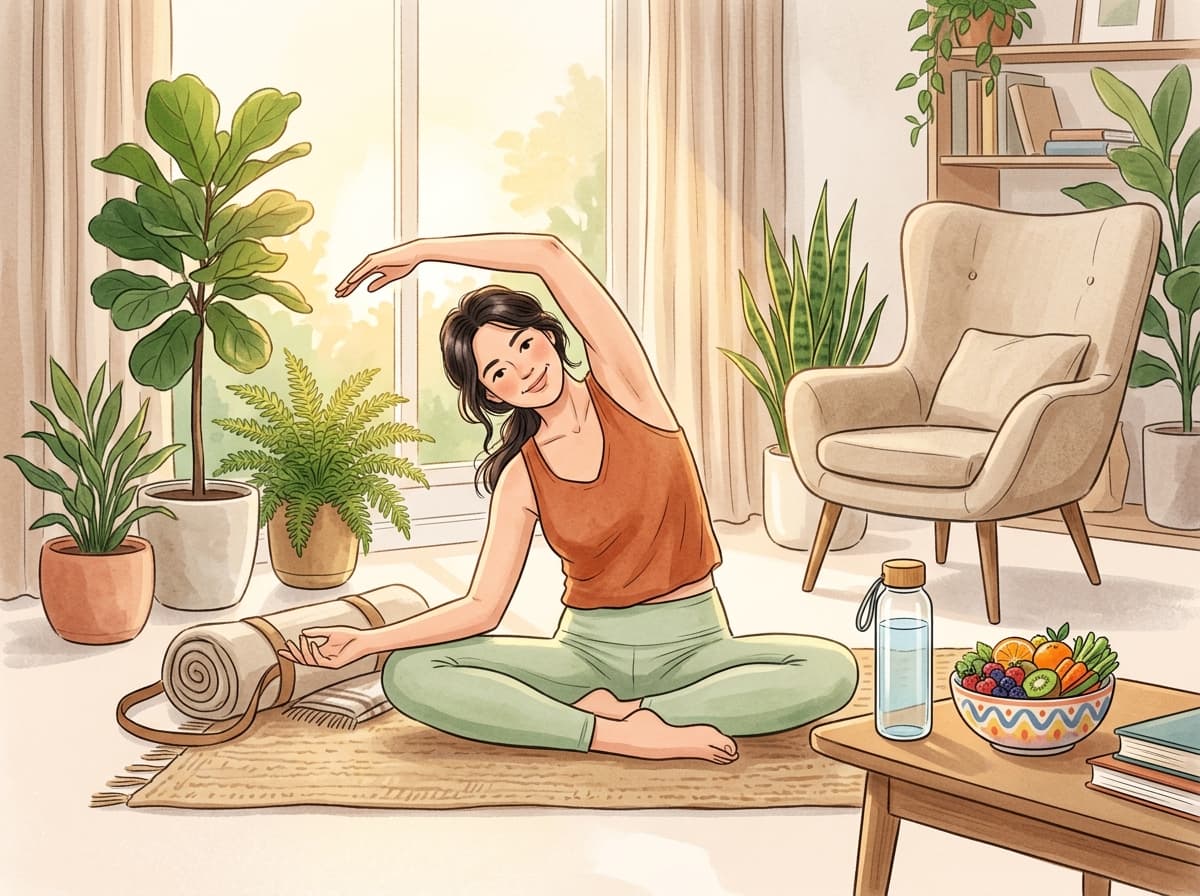
- Eat 25–35 grams of fibre daily — Include whole grains, fruits, vegetables, legumes, and seeds in every meal. Consider isabgol (psyllium husk) supplementation if dietary fibre is insufficient
- Drink 2–2.5 litres of water daily — Adequate hydration keeps stools soft. Increase intake during summer, exercise, or if consuming caffeine
- Exercise regularly — Aim for 30 minutes of moderate activity (brisk walking, swimming, yoga) at least 5 days a week. This promotes healthy bowel motility and improves blood circulation
- Avoid prolonged sitting — If you have a desk job, stand up and walk for 2–3 minutes every hour. Use a standing desk if possible. During long drives, take breaks every 1–2 hours
- Don't delay the urge — Go to the bathroom as soon as you feel the need. Holding it in causes stool to harden and increases straining later
- Limit toilet time to 5–10 minutes — Leave your phone outside the bathroom. If the stool doesn't pass easily, get up and try again later
- Use a footstool — A 15–20 cm stool under your feet while sitting on the toilet straightens the rectum and makes evacuation significantly easier
- Maintain a healthy weight — Excess body weight increases intra-abdominal pressure. Even a 5–10% weight loss can reduce hemorrhoid symptoms
- Practise proper lifting technique — When lifting heavy objects, exhale during the effort phase and engage your core. Avoid holding your breath (Valsalva manoeuvre), which spikes abdominal pressure
- Manage stress — Chronic stress can alter bowel habits and contribute to constipation. Practise relaxation techniques like deep breathing, meditation, or yoga
Piles During Pregnancy: Special Considerations
Hemorrhoids are extremely common during pregnancy, particularly in the second and third trimesters. The growing uterus compresses the inferior vena cava, increasing pressure in the rectal veins. Hormonal changes (elevated progesterone) also relax the walls of blood vessels, making them more prone to swelling.
Safe management during pregnancy includes:
- High-fibre diet with adequate hydration
- Sitz baths (warm, not hot) — 15–20 minutes, 2–3 times daily
- Sleeping on your left side to reduce pressure on the inferior vena cava
- Gentle walking and pelvic floor exercises (Kegels)
- Topical witch hazel pads for external irritation
- Avoiding prolonged standing or sitting
- Consulting your obstetrician before using any medicated creams — some contain steroids or local anaesthetics that may not be safe during pregnancy
REASSURANCE: In most cases, pregnancy-related hemorrhoids resolve spontaneously within 4–6 weeks after delivery as hormonal levels normalise and the pelvic pressure decreases. If symptoms persist beyond this period, consult a doctor for evaluation.
Myths vs Facts: Clearing Up Misconceptions About Piles
Common Myths About Piles (Hemorrhoids) — Debunked
| Myth | Fact |
|---|---|
| Piles are caused by sitting on cold surfaces | There is no scientific evidence linking cold surfaces to hemorrhoid development. Piles are caused by increased pressure in the rectal veins. |
| Only old people get piles | While more common after age 40, hemorrhoids can occur at any age — including in teenagers and young adults with poor dietary habits or constipation. |
| Spicy food causes piles | Spicy food does not cause piles, but it can irritate existing hemorrhoids during passage, temporarily worsening symptoms like burning and itching. |
| Piles always require surgery | The majority of hemorrhoids (Grade I–II) are managed with dietary changes, fibre supplements, sitz baths, and topical treatments. Surgery is needed only for severe or recurrent cases. |
| Piles can turn into cancer | Hemorrhoids are NOT a pre-cancerous condition and do not transform into cancer. However, rectal bleeding should always be evaluated to rule out other causes. |
| You have to live with piles forever | With proper treatment and lifestyle changes, piles are highly treatable and recurrence can be prevented. Modern procedures have cure rates of 85–95%. |
Dietary Do's and Don'ts for Piles Patients
Foods to Eat and Avoid When You Have Piles
| DO Eat (Helps Healing) | AVOID or Limit (Worsens Symptoms) |
|---|---|
| Whole grains: oats, brown rice, whole wheat roti, millets | Refined grains: maida (white flour), white bread, instant noodles |
| Fruits: papaya, guava, apples, pears, bananas, berries | Excessive dairy: too much cheese, paneer in one sitting |
| Vegetables: spinach, carrots, broccoli, beans, lauki, bhindi | Red meat and processed meat: sausages, salami, bacon |
| Legumes: rajma, chana, moong dal, lobia, sprouts | Fried and junk food: samosas, pakoras, chips, fast food |
| Fluids: water, buttermilk, coconut water, herbal teas | Excessive caffeine and alcohol: more than 2 cups of coffee/tea daily |
| Seeds: flaxseeds, chia seeds, sabja (basil seeds) in water | Excessive spicy food: very hot chillies, raw garlic in large quantities |
| Probiotics: curd/yoghurt, fermented foods (idli, dosa batter) | Iron supplements (can cause constipation — consult doctor for alternatives) |
Recovery After Hemorrhoid Surgery: What to Expect
If you do undergo a surgical procedure for piles, here's a general timeline of what to expect during recovery:
- Days 1–3: Moderate to significant pain is normal, managed with prescribed painkillers and sitz baths. Expect some bleeding during bowel movements. Stool softeners are usually prescribed to avoid straining
- Days 4–7: Pain gradually decreases. Most patients on minimally invasive procedures can return to light activity. Continue sitz baths 2–3 times daily
- Weeks 1–2: Resume normal activities for most procedures. Avoid heavy lifting, strenuous exercise, and prolonged sitting. Follow up with your surgeon
- Weeks 2–4: Full recovery for open hemorrhoidectomy. The wound heals completely, and bowel habits normalise
- Long-term: Maintain the dietary and lifestyle changes permanently to prevent recurrence. Follow up as advised by your surgeon
AT SANJIVANI HOSPITAL: Our General Surgery team offers the full spectrum of hemorrhoid treatments — from conservative management to advanced laser hemorrhoidoplasty and stapled hemorrhoidopexy. We use state-of-the-art techniques that minimise pain and recovery time. If you're struggling with piles, don't suffer in silence — book a consultation today.
The Bottom Line
Piles are an incredibly common condition that affects millions of people across all age groups. The key takeaways from this guide are:
- Most cases of piles are preventable through a high-fibre diet, adequate hydration, regular exercise, and healthy toilet habits
- Early-stage hemorrhoids (Grade I–II) respond well to conservative treatment — dietary changes, sitz baths, fibre supplements, and topical treatments
- Don't ignore symptoms — persistent bleeding, pain, or a palpable lump should be evaluated by a doctor to rule out serious conditions
- Modern treatments are highly effective — from painless rubber band ligation to laser surgery, today's procedures offer cure rates of 85–95% with minimal downtime
- Break the stigma — piles are a medical condition, not something to be ashamed of. Seeking timely treatment saves you from unnecessary suffering and complications